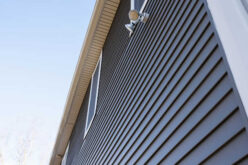
More importantly, your home’s siding is the first line of defense against the elements and external forces. It is essential to keep your home’s exterior in good condition, but how do you know when it’s time to replace your siding?
This blog post will examine five signs that indicate it’s time to replace your home’s siding.
Cracks and Gaps
The most visible sign of aging and damage is the appearance of cracks and gaps in your home’s siding. Over time, exposure to the sun, rain, and other weather elements can cause the material to become brittle, causing it to crack and form gaps.
Gaps and cracks allow moisture, insects, and other pests to enter your home, causing significant damages. If you notice any cracks or gaps, it’s crucial to address the issue immediately by contacting a siding contractor.
Fading or Peeling Paint
Has the once vibrant color of your home’s siding faded or begun to peel? Fading or peeling paint indicates that your siding is losing its protection against the elements. Exposure to UV rays and weather extremes breaks down paint, causing it to disintegrate.
The result is bare siding exposed to the elements, which can cause your siding to warp, rot, or mold. A siding contractor can help give your home a fresh coat of paint or replace the old siding with a new one.
Before you start any exterior home project – such as replacing roof, fixing the foundation, getting a new driveway, expanding the porch, and any other major exterior home project, run some financial numbers to determine whether the renovation is a smart investment.
The numbers include the estimated costs, home value assessment, financing costs, and other related calculations.
Review these cost-related issues to remodeling vs. buying a new home.
links to internal page (opens new win)
| analyze the numbers | |
| estimate the cost of your project | |
| get your home value |
The 2nd step for planning your exterior home project is deciding what you would like to do.
Will it be a –
- replacing the roof and/or gutters,
- adding new siding,
- updating the porch and home entryway,
- installing a new driveway and/or walkway,
- addressing foundational issues,
- decorating the exterior with trim, shutters and more decor,
- or something else.
Start collecting ideas by referencing our collection of home structural analysis: view directory
Step 3 is sketching your ideas on paper (or digitally) and developing the spec plan.
The spec plan determines what type of exterior home project materials, items, and design considerations that will be needed. It will also contain the product specifications for each structural element.
You will use the spec plan and architectural design to bid the project out to a contractor.
links to internal page (opens new win)
| developing the spec plan | |
| sketch remodeling plan | |
| design considerations |
Step 4 is finding and negotiating the contract with a structural contractor.
Give your exterior home project ideas and specs to a contractor for review and bid analysis. Use the local network (aligned with HomeAdvisor) to find the right contractor for your project.
Review guides for contractor selection and negotiation.
links to internal page (opens new win)
| search exterior home contractors | |
| selecting your contractor checklist |
| contractor negotiations | |
| contractor evaluation form |
Step 5 is arranging financing once you selected the contractor and finalized the contract for your project.
Using the equity value in your home is one of the best financing option for exterior home project. Start with a home equity line of credit or use the bank equity program.
Other options may include cash-out refinancing, personal savings, and/or financing from home improvement contractors.
links to internal page (opens new win)
| financing options | |
| getting qualified for financing | |
| negotiate rates |
Step 6 is where the project begins.
It starts with setting up the work area, removing everything that needs to be replaced, installing necessary connections, putting in the final touches, etc.
It also means working with the contractor, managing the project, and getting the home remodeling project inspected before releasing any funds.
links to internal page (opens new win)
| working with the contractor | |
| managing remodeling project |
| about a home project inspections | |
| find home inspector |
Mold and Mildew
Mold and mildew are hazardous to both your home and health. Mold and mildew can grow on any material as long as moisture is present, and your home’s siding is no exception. Mold and mildew growth on your siding are signs that water is seeping through it and causing damage.
If left unaddressed, mold and mildew will spread to other areas of your home, causing structural damage and health issues. A siding contractor or professional roofer, like Crossover Roofing, can help determine the extent of the damage and recommend the appropriate repairs or replacements.
Bubbles or Warps
If you notice bubbles or warps on your siding, it is a sure sign that your siding has sustained significant water damage. When water penetrates your siding, it causes it to swell and bubble, which can eventually lead to warping.
Warped or uneven siding can also indicate that your siding has suffered damage due to strong winds or impact. In either case, it’s essential to get in touch with a siding contractor to fix the problem before it gets more severe.
High Energy Bills
A sudden increase in your home’s energy bills might be a clue that your siding is no longer efficient. Your siding plays a vital role in insulating your home, keeping the hot air inside during winter and cool air in during summer.
other related articles of interest:
5 Tips to Help You Upgrade Your Home’s Exterior Look
5 Tips for Choosing the Perfect Exterior Paint Color of Your Home
However, if your siding is not functioning correctly, or damaged, it will cause your home to lose heat in the winter and increase the heat in the summer. By replacing your old siding with an energy-efficient one, you can save on your energy bills and make your home more comfortable.
Replacing the siding on your home is a significant investment, but it’s one that you’ll benefit from in the long run. By keeping an eye out for the signs highlighted in this blog post, you can prevent significant damages and costly repairs.
If any of these signs are present in your home’s siding, it’s crucial to get in touch with a reliable and experienced siding contractor. Maintaining the exterior of your home not only enhances its curb appeal but also increases its value and, most importantly, keeps you and your family safe and comfortable.
Find Home Siding Services Siding Brick Concrete Stone top-rated, pre-screened local contractors FREE: download contractor selection enter zip code – powered by HomeAdvisor ™


Image credit: by envato.com
end of post … please share it!
| more photo remodeling |
Jump Over to Our Photo Analysis Center for Ideas on
"Renovating Home"
|__________________________________________________________|
home remodeling surprise
find out where it might go - new win


Helpful article? Leave us a quick comment below.
And please share this article within your social networks.