Quick Answer:
Yes, a home battery can still make sense without solar. It charges from the grid, kicks in automatically during outages, and can help you save on time-of-use electricity rates. The right fit depends on your outage frequency, utility rate plan, and whether you plan to add solar later.
A standalone battery connects to your home’s electrical system, draws power from the grid, and steps in the moment the lights go out—no panels required.
That said, a battery without solar isn’t automatically the right choice for every home. The value you get depends heavily on where you live, how your utility structures its rates, and how often your power actually goes out.
This guide walks you through how standalone batteries work, where the financial benefits show up, and how to weigh a battery-only setup against pairing storage with solar down the road.
We’ll also be upfront about a few things that have changed recently, including federal incentives, so you can plan your budget with accurate numbers rather than outdated assumptions.
- post content
- Do Home Batteries Work Without Solar?
- What Financial Benefits Come Without Solar?
- When Does a Battery-Only System Make Sense?
- How Much Do Home Batteries Cost Today?
- Should You Choose Battery-Only or Solar-Plus-Battery?
- conclusion
- FAQs
- view table:content summary
- view notes:collective tips
- view analysis:Installing a Solar Energy System
- view ideas:latest remodeling analysis
Do Home Batteries Work Without Solar?
Yes. A standalone battery, like a Tesla Powerwall or an Enphase IQ Battery, charges directly from your utility’s grid electricity rather than from rooftop panels.
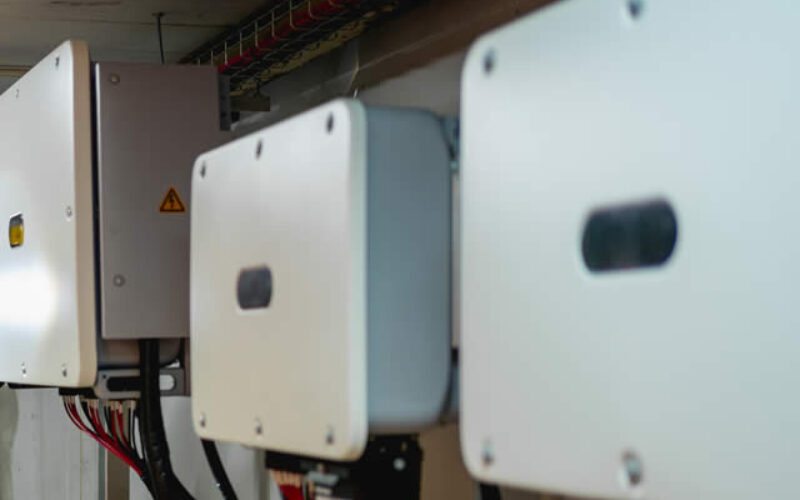
It sits quietly in a garage or utility closet, monitors your home’s power supply, and switches on automatically within moments of an outage. Compared to a gas generator, a battery is quieter, requires no fuel storage, and needs far less upkeep.
Most residential batteries store between 10 and 20 kWh of electricity, with 10 to 15 kWh being common for whole-home backup setups. For context, the average U.S. household uses roughly 29 kWh per day, according to the U.S. Energy Information Administration.
That means a single battery can comfortably power essential circuits, like refrigeration, lighting, and a few outlets, for one to three days, but it will drain much faster if it’s covering your entire home.
A central air conditioning unit alone can draw 3.5 kW or more, which could exhaust one battery in about four hours of continuous use.
-
How a critical loads panel changes the math
Many homeowners install a critical loads panel, a separate subpanel that connects only your essential circuits to the battery. This stretches your runtime considerably. If you want true whole-home backup or multi-day protection, you may need two or three battery units working together.
-
Installation and ongoing maintenance
Professional installation matters here. A licensed installer ensures your system meets electrical and safety codes and is configured correctly for your home’s panel and critical loads. Once installed, battery systems are fairly low-maintenance, typically requiring only occasional software updates.
Warranties commonly run around 10 years; Tesla’s Powerwall 3, for example, carries a 10-year warranty with 70% capacity retention guaranteed. Always confirm the specific warranty terms for the brand you’re considering, since coverage varies.

What Financial Benefits Come Without Solar?
Even without solar panels feeding it, a battery can still work in your favor financially. If your utility offers a time-of-use rate plan, you can charge your battery overnight when electricity is cheap and draw from it during the late afternoon and evening peak, when rates climb.
Over time, this kind of arbitrage can meaningfully reduce your monthly bill, especially in regions where the gap between off-peak and peak pricing is wide.
Larger homes and some businesses also face demand charges, a fee based on the highest amount of power drawn at any single moment, rather than total energy used. A battery can smooth out those spikes by supplying power during high-demand moments instead of pulling it all from the grid, which can lower that portion of your bill.
Then there’s the benefit that’s harder to put a dollar figure on but is often the main reason homeowners buy a battery in the first place: protection during outages.
A battery prevents the cost and hassle of spoiled food, disrupted work-from-home days, and the wear a generator puts on itself every time it cycles on. Think of it as insurance that happens to pay you back a little along the way.
more info below

A Homeowner’s Guide to Installing a Solar Energy System
Installing a solar energy system is an excellent way for homeowners to reduce their carbon footprint, lower energy bills, and increase the value of their property.
When Does a Battery-Only System Make Sense?
A standalone battery tends to make the most sense for a few specific types of households. If you live somewhere that experiences frequent short outages, a battery offers near-instant, maintenance-free backup.
If your utility has a strong time-of-use rate differential, you’ll likely see savings show up on your bill relatively quickly. And if your home isn’t a good candidate for solar right now, whether because of a shaded roof, an HOA restriction, or a short-term plan to sell, a battery still lets you build energy resilience today.
Choose a battery-only system if reliable backup power and rate optimization matter more to you right now than long-term energy savings. Choose solar-plus-battery if you’re planning to stay in your home for years and want to maximize total savings over time.
According to EnergySage (2026), the average solar shopper saves more than $60,000 on electricity over 25 years, a figure a battery alone cannot replicate since it still relies on grid-purchased electricity to recharge.
It’s worth noting that most modern batteries are designed to pair with solar later. Choosing a solar-compatible battery now keeps that door open, even if panels aren’t in your immediate plans.
How Much Do Home Batteries Cost Today?
Battery system costs generally fall between $10,000 and $15,000 installed, though pricing climbs with capacity and brand.
According to EnergySage (2026), the average installed cost for 13.5 kWh of storage, roughly the size of one Tesla Powerwall 3, was $15,650. Getting several quotes is worth the effort, since pricing can vary significantly by installer and region.
Here’s where it’s important to update an assumption many homeowners still carry: the federal 30% investment tax credit that once applied to battery storage expired for systems installed after December 31, 2025, under the One Big Beautiful Bill Act.
If you installed a battery in 2025, you can still claim that credit on IRS Form 5695 with your 2026 tax filing, but new installations going forward generally won’t qualify at the federal level.
Some states and utilities continue to offer their own rebates, tax credits, or virtual power plant programs that pay you for letting your utility tap your battery’s stored energy during grid stress, so it’s worth checking what’s available locally before you budget.
Payback period is genuinely harder to pin down for a standalone battery than for solar. EnergySage notes that the primary value of a battery used alone is insurance-style protection rather than a clean financial return, which makes payback difficult to calculate with precision.
As a rough planning range, some homeowners estimate 7 to 12 years, but treat that as a loose estimate rather than a guaranteed figure. If you’re also using the battery for time-of-use savings, you’ll see the financial impact reflected in your utility bills relatively quickly, which gives you a faster read on whether it’s paying off.
Should You Choose Battery-Only or Solar-Plus-Battery?
A battery-only system shines in specific circumstances: strong time-of-use rate differentials, frequent outages, or a home that simply isn’t ready for solar yet. Solar-plus-battery, on the other hand, delivers the greatest long-term savings because the battery recharges from free sunlight rather than grid electricity, but it requires a larger upfront investment.
EnergySage puts it plainly: “In nearly every scenario it makes most sense to pair a home battery with solar.” That doesn’t mean a standalone battery is a poor choice, it means solar amplifies the value a battery can provide.
If budget or roof conditions keep solar off the table for now, a solar-compatible battery still gives you backup power and bill management today, while leaving the door open for solar panels later.
Before deciding, take stock of your local electricity rates, how often your area experiences outages, and your longer-term energy goals. Those three factors, more than any national average, will determine whether a battery alone delivers real value for your household.
Is a Standalone Battery Right for Your Home?
A home battery can absolutely deliver value without a single solar panel on your roof, especially if frequent outages, a favorable time-of-use rate plan, or demand charges are part of your household’s reality. The financial return is harder to guarantee than with solar, but the backup power, bill management, and peace of mind are real benefits on their own.
Before you commit, check your local utility’s rate structure, ask about state or utility rebate programs, and get multiple installation quotes. Because federal incentives and local programs continue to shift, it’s worth consulting a licensed installer, a qualified electrician, and a tax professional to confirm what applies to your specific situation before you sign a contract.
Frequently Asked Questions About Home Batteries
-
How much does a home battery cost without solar?
Installed costs typically range from about $10,000 to $15,000 or more depending on capacity and brand. According to EnergySage (2026), the average cost for 13.5 kWh of storage was $15,650.
-
What is the payback period for a standalone battery?
Payback is harder to calculate for a battery alone than for solar, since its main value is backup protection rather than guaranteed savings. Some homeowners estimate 7 to 12 years, but this varies widely based on local rates and how you use the battery.
-
How long can a home battery power my house during an outage?
A 13.5 kWh battery can run essential circuits for roughly 8 to 18 hours depending on your region and usage, while whole-home use, especially air conditioning, drains it much faster, sometimes in just a few hours.
-
Can a battery actually lower my electricity bill through time-of-use savings?
Yes. If your utility offers time-of-use pricing, you can charge the battery during cheap off-peak hours and use that stored power during expensive peak hours, reducing your overall bill over time.
-
What are demand charges, and can a battery help with them?
Demand charges are fees based on your highest moment of power use rather than total energy consumed, and they typically apply to businesses and some larger homes. A battery can offset power spikes during high-demand periods, helping lower this portion of a bill.
-
Are there still tax incentives for home batteries after 2025?
The federal 30% tax credit for battery storage expired for installations after December 31, 2025. Systems installed in 2025 can still claim it via IRS Form 5695. Beyond that, availability depends on state and utility programs, including virtual power plant participation, so check locally.
-
Is a home battery better than a generator for backup power?
A battery is quieter, requires no fuel storage, and needs minimal maintenance compared to a generator, though it stores a finite amount of energy and may need a critical loads panel to extend runtime for essential circuits.
-
Can I add solar panels later if I start with a battery-only system?
Yes. Most modern batteries are designed to be solar-compatible, so choosing one with that capability now lets you add solar panels later without replacing your storage system.
-
How much maintenance and warranty coverage do home batteries have?
Battery systems generally require minimal maintenance beyond occasional software updates. Warranties commonly run around 10 years, such as the Tesla Powerwall 3’s 10-year warranty with 70% capacity retention, though coverage varies by brand.
home improvement ideas to consider (complete directory – new win):


| Section | Description | Key Insights |
|---|---|---|
| Do Home Batteries Work Without Solar? | A standalone home battery can charge directly from the grid and provide backup during outages. It operates quietly and requires minimal maintenance compared to a gas generator. | Standalone batteries are effective for short outages and can power essential circuits for 1-3 days with typical capacities of 10-20 kWh. |
| What Financial Benefits Come Without Solar? | Even without solar, batteries save money through time-of-use rate optimization and reduced demand charges. They also offer protection during outages. | Savings depend on utility rate structures, but batteries provide cost smoothing, backup power, and indirect financial benefits like avoiding spoiled food during outages. |
| When Does a Battery-Only System Make Sense? | Battery-only systems are ideal for homes with frequent outages, strong time-of-use rate incentives, or those not ready for solar installation due to roof conditions or budget. | Batteries provide immediate energy resilience, while solar pairing adds long-term value. Modern batteries are often solar-compatible for future upgrades. |
| How Much Do Home Batteries Cost Today? | Installed costs for home batteries range from $10,000 to $15,000 depending on capacity and brand, with some local and state incentives still available. | Federal tax incentives have expired for most cases, but payback periods range from 7 to 12 years, influenced by the usage patterns and utility rates. |
| Should You Choose Battery-Only or Solar-Plus-Battery? | Battery-only is suited for specific cases like frequent outages or time-of-use benefits, while solar-plus-battery offers the greatest long-term savings. | Solar amplifies battery value by recharging with free sunlight, making the combination more economically viable over time for most households. |
| Is a Standalone Battery Right for Your Home? | A standalone battery provides value through backup power, bill management, and peace of mind, even without solar panels. | To determine suitability for your home, assess utility rates, outages, local rebate programs, and consult professionals before finalizing the decision. |

Find Energy Efficient Services Insulation Windows-Insulation Ducts & Vents Appliances Solar Installation Skylights Home Automation Generators Plumbing Issues Electrial Wiring Networks/Phone Computers/ Media Home Security Alarms Air Conditioning Central Heating Water Heaters Thermostats top-rated, pre-screened local contractors FREE: download contractor selection enter zip code – powered by HomeAdvisor ™


Image credit: home battery by envato.com
end of post … please share it!

| more photo remodeling |
Jump Over to Our Photo Analysis Center for Ideas on
"Renovating Home"
|__________________________________________________________|
home remodeling surprise
find out where it might go - new win


Helpful article? Leave us a quick comment below.
And please share this article within your social networks.