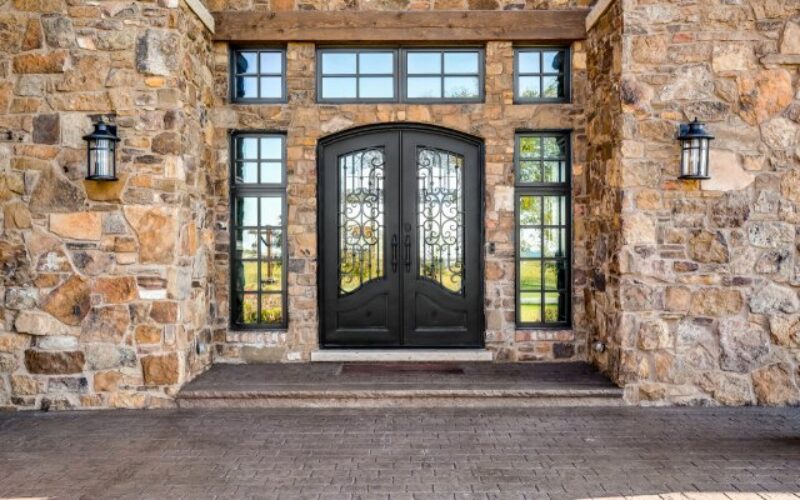

An iron entry door already makes a strong first impression, yet sidelights can change its entire presence. A slim glass panel can make the entrance feel lighter. Two matching panels can create a wider, more formal look. When homeowners consider the way sidelights shape iron entry door design, they can choose a layout that suits the house rather than treating the glass as an afterthought.
Sidelights illuminate dark hallways or enhance porch views, while glass type affects privacy and frame style influences doorway perception.
Choosing the right sidelights depends on entrance width and architecture, as scale is as important as style.
1. They Can Make the Entrance Look Wider
A standard iron door creates a strong vertical shape. Sidelights extend the design across the façade, making the whole entrance appear broader.
Two sidelights often create a balanced, formal look. They work well with centered front doors or matching porch columns. A single sidelight feels less symmetrical and may suit homes with modern lines or limited wall space.
Before choosing a layout, look at the width of the porch. Broad panels can crowd a narrow entrance. Very slim panels may look lost beside a large double door.
Quick Proportion Check
Stand across the street and look at the entire front of the house. Ask:
- Does the entrance feel too narrow compared with the windows?
- Would one sidelight balance an off-center door?
- Do two panels fit without crowding nearby lights or columns?
- Does the porch landing extend beyond the full doorway?
A front elevation photo can also help. Mark the proposed sidelight width on the image before ordering anything.
2. They Can Soften Heavy Ironwork
Decorative iron doors often feature scrolls or thick frames. Without glass around them, these details can appear dense, especially on smaller facades. Sidelights create a sense of space around the door. Clear glass offers the lightest look, allowing the eye to flow through the entrance, while frosted glass softens the appearance and limits direct views into the hall.
Patterned glass adds character but should be used sparingly. A detailed door generally pairs better with simple sidelights, whereas a plain door can support more decorative glass patterns.
The color of the frame also impacts the overall look: black frames create a unified appearance, while a contrasting trim color can distinguish the sidelights and link them visually to nearby window frames.
Keep the Details Balanced
A simple way to avoid visual overload:
- Pair decorative ironwork with quieter glass.
- Use stronger glass patterns beside a plain door.
- Repeat one exterior finish elsewhere on the façade.
- Keep the door hardware consistent with the frame.
That balance gives each feature room to stand out.
3. They Help the Door Fit the Architecture
An iron entry door should feel connected to the building around it. The sidelight design can strengthen that relationship.
Straight glass divisions often suit contemporary homes. Arched tops may work better with Mediterranean-inspired entrances. Traditional houses may look more natural with divided panes or softer curves.
The same idea applies when pairing an iron door with the exterior design. The door shape and glass pattern should relate to the home’s existing lines. Brilon Iron Works recommends looking at architectural details before choosing the finish or decorative pattern.
Sidelights can echo shapes already present on the house. Narrow vertical panes might mirror tall windows. A curved top can link with an arched porch opening. Simple rectangular sidelights may complement a home with strong horizontal lines. Homeowners don’t need every exterior feature to match; repeating just one finish or shape often provides enough harmony. For example, black iron frames could relate to porch lights, while divided glass might reflect a nearby window pattern.
Quick Style Guide
- Contemporary homes often suit clean frames and clear glass.
- Traditional homes may work well with divided panes.
- Mediterranean styles can support curves or decorative iron.
- Smaller cottages often benefit from narrow sidelights.
- Large façades can carry wider panels or matching pairs.
Use these ideas as a starting point, not a strict rule.
4. They Change Light and Privacy Indoors
Sidelights can enhance an entry hall that has no windows. Even a narrow panel can allow enough daylight to make the space feel more open. Clear glass offers the best view and maximum light, but also provides a direct view into the home for outsiders.
Frosted or textured glass increases privacy while still illuminating the hall. The house’s orientation matters; a sidelight facing strong afternoon sun can cause glare or excess heat. A shaded entry might benefit from clearer glass since less light enters the interior.
Homeowners should think about what is directly behind the door. A clear sidelight next to a staircase may feel comfortable, but the same panel near a living room could seem too exposed.
Privacy Options That Keep the Look Clean
- Frosted glass
- Reeded glass
- Etched patterns
- Removable privacy film
- A narrow interior shade
The glass itself usually creates the cleanest finish. Films and shades can work well when homeowners want more flexibility.
Energy ratings also matter. The National Fenestration Rating Council provides labels for doors and windows that show how well a product limits heat transfer. Compare the full entry system rather than the door slab alone.
5. They Can Refine the Whole Front Elevation
Sidelights change more than the doorway. They affect porch lighting and house-number placement. They may also make the steps look too narrow if the entrance extends beyond the landing.
A broader entry often needs stronger lighting. One small wall lantern may look undersized beside two sidelights. Matching fixtures can frame the full opening when space allows.
The threshold and porch surface also deserve a second look. A wide iron entry can feel cramped when the landing ends near the frame. Extending the visual line of the steps can create a more settled appearance.
Installation can involve structural changes when homeowners replace a standard door with a wider system. A contractor should inspect the opening before the unit is ordered. Custom iron doors often leave little room for measurement errors.
Quick Planning Tips
Before placing an order:
- Measure the rough opening and surrounding wall.
- Check room for switches or interior trim.
- Review porch-light placement.
- Confirm the landing width.
- Compare glass samples in daylight.
A full-size sketch can help. Use painter’s tape to mark the proposed width on the wall and step back to view it from the street.
Choosing the Right Sidelight Layout
Sidelights work best when they support the door rather than compete with it. They can make an entrance look wider or bring more light into the hall. Their glass pattern can also connect the door with the home’s architecture.
Careful planning shows how side glass can reshape an iron entry door while keeping the design grounded in the rest of the exterior. A single sidelight may create a relaxed look, while a matching pair can add formality.
Image Credentials: Photographer: Joseph Hendrickson File #: 720536979
|__________________________________________________________|
home remodeling surprise
find out where it might go - new win


Helpful article? Leave us a quick comment below.
And please share this article within your social networks.