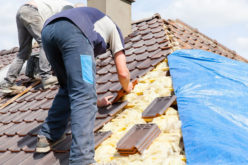
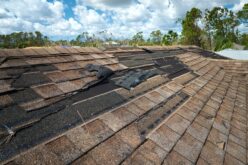
However, it’s easier to tell when a wall or window is damaged or in need of replacement than it is the roof. While it can be difficult to identify, some key signs indicate a roof needs to be replaced.
Types of Roofs
There are many different types of roofs, and their different qualities can affect the kinds of damage they’re more vulnerable to. The type of roof you have can affect the cost of maintenance and replacement.
Three of the most common types of roofs are asphalt roofs, metal roofs, and shingle roofs. Asphalt roofs are the most commonly used type of roof. They are composed of asphalt and underlayment, which is a protective material.

Asphalt roofs are made with a “pitch” that determines how steeply they slope. This type of roof is generally inexpensive to install and maintain, and very durable.
Metal roofs are becoming more common and are less expensive than asphalt roofs, and are also less likely to fail compared to older roof types.
Metal roofs are more expensive to install than asphalt roofs and don’t last as long, so they may require more frequent maintenance.
When Should You Replace a Roof?
Replacing your roof can be a worthwhile investment. When the roof has failed, the entire structure has been compromised.
Roof replacement should be done after your home has been inspected and repaired, but before it is rebuilt. To determine when your roof should be replaced, you should ask yourself the following questions.
- How old is your roof? If your roof is more than 25 years old, it is time to replace it.
- How severe is the damage to your roof? If there was a severe storm or hurricane that caused extensive damage to your roof, it is time to replace it.
- Is your home built to code? If your home is not built to current building codes, or if it has defects that affect its structural integrity, your roof may need to be replaced sooner.
- How much does it cost to maintain your roof? Every year you spend maintaining your roof is one year you are not saving for retirement.
- How much is your home worth? If your home is worth less than the cost of a new roof, it may be worth hiring a professional company like Cenvar Roofing to replace your roof.

Before you start any exterior home project – such as replacing roof, fixing the foundation, getting a new driveway, expanding the porch, and any other major exterior home project, run some financial numbers to determine whether the renovation is a smart investment.
The numbers include the estimated costs, home value assessment, financing costs, and other related calculations.
Review these cost-related issues to remodeling vs. buying a new home.
links to internal page (opens new win)
| analyze the numbers | |
| estimate the cost of your project | |
| get your home value |
The 2nd step for planning your exterior home project is deciding what you would like to do.
Will it be a –
- replacing the roof and/or gutters,
- adding new siding,
- updating the porch and home entryway,
- installing a new driveway and/or walkway,
- addressing foundational issues,
- decorating the exterior with trim, shutters and more decor,
- or something else.
Start collecting ideas by referencing our collection of home structural analysis: view directory
Step 3 is sketching your ideas on paper (or digitally) and developing the spec plan.
The spec plan determines what type of exterior home project materials, items, and design considerations that will be needed. It will also contain the product specifications for each structural element.
You will use the spec plan and architectural design to bid the project out to a contractor.
links to internal page (opens new win)
| developing the spec plan | |
| sketch remodeling plan | |
| design considerations |
Step 4 is finding and negotiating the contract with a structural contractor.
Give your exterior home project ideas and specs to a contractor for review and bid analysis. Use the local network (aligned with HomeAdvisor) to find the right contractor for your project.
Review guides for contractor selection and negotiation.
links to internal page (opens new win)
| search exterior home contractors | |
| selecting your contractor checklist |
| contractor negotiations | |
| contractor evaluation form |
Step 5 is arranging financing once you selected the contractor and finalized the contract for your project.
Using the equity value in your home is one of the best financing option for exterior home project. Start with a home equity line of credit or use the bank equity program.
Other options may include cash-out refinancing, personal savings, and/or financing from home improvement contractors.
links to internal page (opens new win)
| financing options | |
| getting qualified for financing | |
| negotiate rates |
Step 6 is where the project begins.
It starts with setting up the work area, removing everything that needs to be replaced, installing necessary connections, putting in the final touches, etc.
It also means working with the contractor, managing the project, and getting the home remodeling project inspected before releasing any funds.
links to internal page (opens new win)
| working with the contractor | |
| managing remodeling project |
| about a home project inspections | |
| find home inspector |
Things That Cause Roof Failure
- Old age:
The average roof has a lifespan of about 50 years. As your roof ages, it will become more prone to damage and may need to be replaced earlier. - Hurricane and storm damage:
If a strong enough storm hits your area, your roof may be damaged beyond repair. In that case, it may be necessary to rebuild your home with new foundations. - Lead-based paint:
Sometimes, the damage caused by years of wear and tear causes lead-based paint to peel off the roof. If this is the case, it is important to replace the paint and “clean” the remaining lead from the roof. - Excess snow:
A roof that gets too much snow buildup or develops a heavy layer of ice can fail. In such cases, it is important to remove the excess snow from your roof before it causes structural damage. - Defects in the structural integrity of your home:
If your roof has structural defects, such as an unbalanced roof, a roof that is too steep, or an improperly angled roof, it is important to repair these defects before replacing the roof.
other related articles of interest:
Conclusion
The roof is one of the most important components of your home, and damage to it can be bad news. To prevent this it’s important to know the warning signs as well as when to replace your roof.
While it can be a daunting decision to make at the time, taking a decisive stance on the issue is the best way to keep your home at its best and protect yourself.
Find Roofing Services Roofing Gutter Systems Chimney Pest Control top-rated, pre-screened local contractors FREE: download contractor selection enter zip code – powered by HomeAdvisor ™


Image credit: why your roof may need replacement by envato.com
end of post … please share it!
|__________________________________________________________|
home remodeling surprise
find out where it might go - new win


Helpful article? Leave us a quick comment below.
And please share this article within your social networks.