However, justifying a brand new purchase can be difficult for eco-conscious consumers. When appliances are added to landfills, some of their components can take thousands of years to decompose.
Trashed appliances can also contribute to toxic waste since they may contain oils, refrigerants, and other hazardous materials if they aren’t properly removed.
So how often should you replace your appliances to help fight climate change? And how do you ensure you’re being as ethical as possible when throwing out your old appliance?

We’ll explain how old appliances come with major financial and environmental costs, then explore the answers to these questions.
Why Old Appliances Cost Homeowners Money
When you’re asked to choose between spending $1,000 on a new fridge and spending $200 on a repair, it often feels natural to choose the latter.
Replacing appliances when they’re still fixable often feels like a waste of hard-earned cash. However, in the long run, your outdated appliances can actually cost you more than a new appliance would have cost.
One reason old appliances are expensive to maintain is the fact that it’s rarely just "one repair." As appliances age, they’re prone to breakdowns, leaks, and other major issues.
Additionally, decade-old appliances consume a lot of energy — sometimes more than double what new models use. If you pass on an upgrade, even if your 20-year-old appliance is still working fine, you’re missing out on the opportunity to slash your electricity bill.
How Old Appliances Harm the Environment
Old appliances are just as bad for the environment as they are for your wallet. In fact, the primary reason they’re so costly is because of their lack of energy efficiency.
Continuing to use old appliances keeps your carbon emissions significantly higher than they could be. At some point, the excess pollution to add to the world may be a greater environmental cost than tossing out your old appliance and buying a new one.
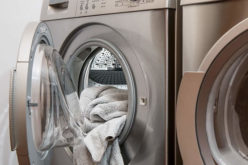
Some old appliances, like washing machines and dishwashers, also use far more water and other resources than modern products. If a machine is starting to break down, it may also require more energy than before to function.
When to Replace Your Appliances
So when does it make sense to replace an appliance in your home? While there’s no need to replace major appliances every few years, a new appliance is well worth the investment after 10-15 years.
This is when most appliances start breaking down, causing you to accumulate costs, and becoming significantly less energy-efficient than current models.
Learning the signs of appliances breaking down can help you determine when to repair or replace each one. For example, when a fridge is about to die, food may spoil faster than usual and the back of your fridge may be hot to the touch.
On the other hand, a localized issue like a broken ice maker isn’t indicative of a worn fridge and may be worth a repair.
How to Replace Appliances Ethically
Tossing an old appliance will inevitably lead to some waste. However, you can minimize your carbon footprint as much as possible by choosing an ethical junk removal company.

| Smart Refrigerator | view ideas | |
| Smart Oven Range | view ideas | |
| Smart Wall Ovens | view ideas | |
| Smart Stove Tops | view ideas | |
| Smart Dishwasher | view ideas | |
| Smart Microwaves | view ideas | |
| Smart Range Hood | view ideas |
While some companies are happy to forward your old appliance to landfills without a thought, others take the time to sort out usable appliances and parts, which can be donated or sold instead.
If you don’t need the help of a junk removal company to take your old appliance away, you can also donate old appliances that are still in good condition yourself. Old appliances that can’t be used as is can be taken to a local recycling center, rather than a junkyard, or taken apart for working parts before being tossed out.
For creative environmentalists, a broken appliance can also be upcycled and repurposed. As an example, a broken fridge can be used as storage, while dishwasher racks can be used as pantry organizers.
Save Money While Fighting Climate Change
When we purchase major appliances, which often cost close to or above $1,000, we naturally want to preserve them for as long as possible.
other related articles of interest:
Upping the Green Factor: Combining Energy Efficiency with Sustainability
DIY Green Home? 4 Home Energy Efficiency Optimizations You Should Leave to the Pros
Repairs can help us reduce the amount of waste we put out into the world. However, too many consumers don’t realize that holding onto decade-old appliances can lead to more environmental costs than a replacement.
Old appliances are less energy-efficient than modern models and can be prone to more ongoing issues, especially when they are near the end of their lifespans.
When you’re ready for a replacement, don’t be afraid to purchase a new appliance and donate, recycle, repurpose, or ethically throw away your old one.
Find Household Appliance Services Appliances Appliance Install Appliance Repair Electrical top-rated, pre-screened local contractors FREE: download contractor selection enter zip code – powered by HomeAdvisor ™

Image credit: how often should you replace your appliances by envato.com
end of post … please share it!
@import url(https://www.letsrenovate.com/ideas/wp-content/themes/novomag-theme/css/responsive/menu.css)
|__________________________________________________________|
home remodeling surprise
find out where it might go - new win


Helpful article? Leave us a quick comment below.
And please share this article within your social networks.