Suppose you’re planning to purchase and use home improvement tools for the first time. In that case, you need to learn more about the nature of the tools before you buy tools online from Data Power tools or other stores.
For this purpose, here’s an article to guide you.
1. Read The Manufacturer’s Instructions
Before using a tool for the first time, you may need to read its manufacturer’s instructions carefully. Although you may have some ideas on how to use a particular tool such as saws, some of their variants, especially the electrical types, may have different functions and manner of use. Because of this, reading the tool’s manual is necessary.
Apart from instructions, manuals contain caution. They generally tell the things to be avoided so the tool could have prolonged use and limit the risk of damage. In addition, the manual offers maintenance and troubleshooting tips.
It also states the suitable brand, specs, and model of replaceable parts of the tool. If the manual isn’t found, you may contact the manufacturer for a replacement.
2. Inspect The Tools For Before And After Use
Before and after using a tool, you need to examine its parts. You may look at the edges of the bladed tools to see if they’re chipped or cracked.
Check the handles in chisels and similar tools to see if they’ve already mushroomed. You could examine the teeth in saws if they’re bent or fragmented.
In electrical devices, inspect burnt areas. You may need to examine old tools more thoroughly because of natural wear and tear.
Apart from the damage to the tool’s surfaces, you may check the internal parts of the mechanisms by gradually using them. For your first tool use in a day, refrain from using the tool for an extended time.
You may try to work on a mock project first such as cutting small blocks of wood in saws or slowly hammering a nail on a wall before doing the long and rigorous tasks.
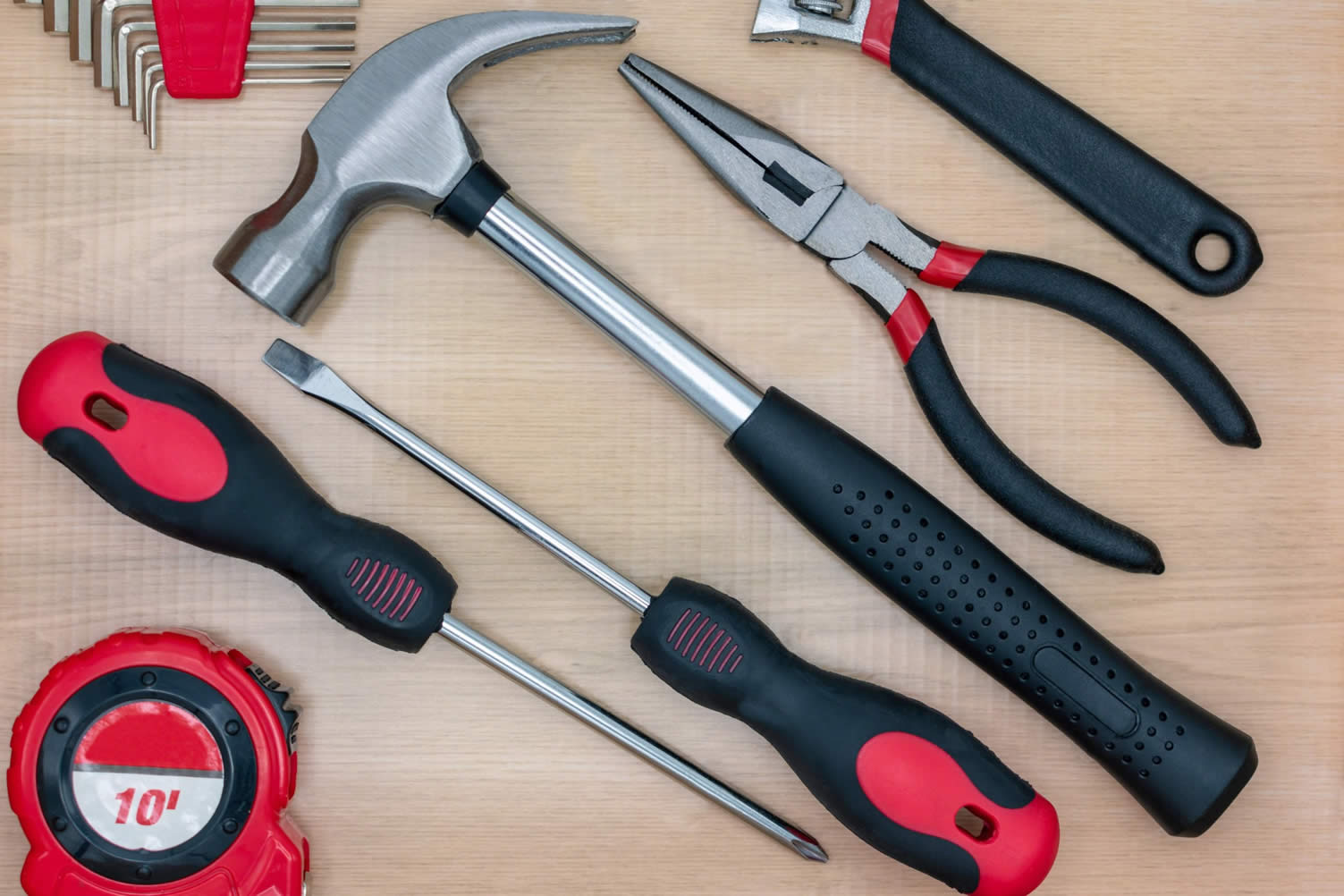
DIY tool settool chest/cabinets
some working with tools to consider
3. Maintain The Appropriate Posture When Using The Tools
In many cases, you need to keep your elbow close to your body when working. Check the handles of your tools if they’re wobbling. Tighten the fitting or bolts if they’re loose.
Before you cut an object, you could mark lines and set the cut’s depth before slicing them according to your desired sizes.
In working on heavy-duty machines and equipment, you need to consider your back and spine. Refrain from lifting heavy objects. You either use a lever or ask somebody to help you heave the life-size tools.
4. Only Use Tools For Their Specific Purposes
One of the practices that damage tools is their inappropriate use. For instance, some DIYers use screwdrivers instead of chisels.
When this happens, the tip of the tool becomes blunt, and the head of the screw becomes damaged.
Another example is when saws are used in cutting objects intended for utility knives. Like the screwdrivers, the saw’s teeth bend and lose their alignment.
To avoid this, use only the appropriate tools fittingly.







Ideas for Home n’ Garden
Collection of Home ‘n Garden Ideas and Analysis to help formulate plans for home remodeling, construction, and landscape design. View ideas for every room and garden space.
5. Ensure That Your Tool’s Handle Is Fixed
One of the causes of the tool’s stability is its handle. Saws have directly attached handles.
Controlling this part means managing the entire tool. The hammer’s handle serves as the lever and control and provides balance when working.
When the handle wobbles, it could be challenging for you to tighten a bolt or cut a block of wood. To prevent this from happening, you need to fix your tool’s handle every time you use it.
You need to tighten the locks and fit the connections in many cases. If they’re difficult to handle, you may just avoid using the tools for safety purposes.
6. Don’t Use Damaged Tools
As the adage in every workplace says, safety first. To achieve this, avoid using defective tools as they could injure you.
If the tools show any damage, you need to separate them from the non-defective ones. You may repair them or dispose of them if they turn out to be unrepairable.
other related articles of interest:
Wrapping Up
As DIY projects become increasingly popular, the demand for top-notch home improvement tools has doubled. Yet, before you try using them, you need to familiarize yourself with how they’re used. You could watch DIY tutorial videos or observe seasoned workers.
After getting acquainted with your tools through watching, you may begin looking for the right tools for your DIY projects. Then, you could practice with them.
You may use the insights and tips from this article to help you. Start working on small DIY projects to get used to using them correctly.
Find Handyman Services (opens new win) Handyman Carpentry Electrical Plumbing top-rated, pre-screened local contractors FREE: download contractor selection enter zip code – powered by HomeAdvisor ™

Image credit: using home improvement tools by envato.com
end of post … please share it!
@import url(https://www.letsrenovate.com/ideas/wp-content/themes/novomag-theme/css/responsive/menu.css)
|__________________________________________________________|
home remodeling surprise
find out where it might go - new win


Helpful article? Leave us a quick comment below.
And please share this article within your social networks.