Quick Answer:
Wallpaper is experiencing a genuine design renaissance in 2025–2026, driven by demand for personalized, texture-rich interiors. Botanical and floral patterns lead the trend, while small-scale prints, scenic murals, and tactile surfaces offer options for every style and space. Peel-and-stick formats now make wallpaper accessible to renters and first-time decorators alike.
The good news? Wallpaper has quietly—and then not so quietly—reclaimed its seat at the interior design table, and what’s available now is a far cry from the dated, paste-heavy rolls of decades past.
The global wallpaper market is projected to grow from USD 13.07 billion in 2025 to USD 16.64 billion by 2031, according to Mordor Intelligence (2026). That kind of sustained momentum doesn’t happen by accident.
It reflects a genuine cultural shift: homeowners are tired of safe, generic spaces and are reaching for design tools that make rooms feel personal, layered, and alive. Wallpaper—paired strategically with textiles, drapery, and upholstered pieces—delivers exactly that.
- post content
- Why Wallpaper Is Relevant Again
- What Botanical and Floral Wallpaper Offers in 2026
- The Case For Small-Scale Prints
- Layering Pattern With Confidence
- Practical Considerations For Modern Wallpaper Installation
- Your Walls Deserve a Decision
- FAQs
- view table:content summary
- view notes:collective tips
- view analysis:Why Peel and Stick Wallpaper
- view ideas:latest remodeling analysis
Why Wallpaper Is Relevant Again
The design world spent a decade celebrating minimalism, and for good reason. Clean lines and neutral palettes created calm, uncluttered environments. But somewhere along the way, “minimal” became “forgettable.” Rooms started looking the same—same warm gray walls, same white linen sofa, same open shelving.
Wallpaper offers an immediate corrective. As Rachel Cope, creative director and co-founder of Calico Wallpaper, told ELLE Decor in 2026: “Heading into 2026, we’re seeing wallpaper move beyond decoration and into the realm of atmosphere and emotion. There’s a growing desire for surfaces that feel grounded, tactile, and deeply personal.”
That desire is showing up in purchasing behavior too. Residential wallpaper demand is forecast to grow at a 5.14% CAGR through 2031—the fastest-growing segment in the market (Mordor Intelligence, 2026).
Consumers aren’t just buying more wallpaper; they’re buying it more thoughtfully, treating it as an investment in the long-term character of a room rather than a quick decorative fix.

What Botanical and Floral Wallpaper Offers in 2026
Botanical and floral wallpaper consistently ranks among the top-performing design categories, and 2026 is no exception. What has changed is the sophistication of the execution. Earlier iterations leaned toward playful, light-handed prints—think simple leaf outlines on a cream background. The current wave goes deeper.
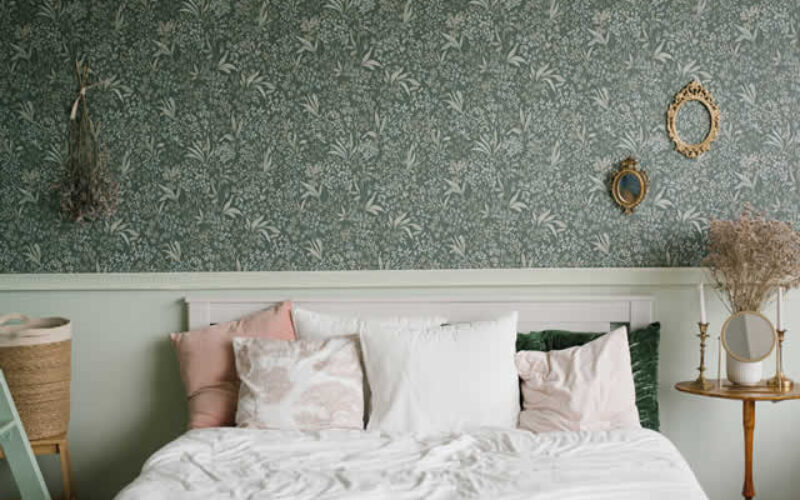
Today’s botanical wallpaper favors moody florals with richer contrast, vintage-inspired garden patterns with layered foliage, and nature scenes rendered with genuine atmospheric depth. The result feels less like decoration and more like environment.
Jemma Cave, design director of de Gournay, captures it well: “Designs feel less graphic, less about perfect realism, and more about material suggestion.”
For spaces where you want nature to feel present without resorting to literal greenery, a dense botanical wallpaper on a single wall can achieve exactly that. Pair it with linen curtains in a complementary earth tone and a jute rug underfoot, and the room earns a coherence that furniture alone cannot produce.
Interior designer Elizabeth Hay notes that earthy, verdant greens are functioning almost like neutrals in 2026: “They create a calming backdrop while still adding richness and personality.”
This is a useful reframe for anyone hesitant about committing to a patterned wall—the right botanical print doesn’t demand attention so much as quietly anchor the space.
something of interest below
Why Peel and Stick Wallpaper Should Be Your New Favorite Thing
One of the most extraordinary things about peel and stick wallpaper vs. pretty much any other way of changing wall color is that there is no mess involved.
The Case For Small-Scale Prints
Not every room calls for a sweeping mural or an oversized bloom. Small-scale prints carry their own design intelligence, particularly in tighter spaces where a large-scale pattern might overwhelm rather than elevate.
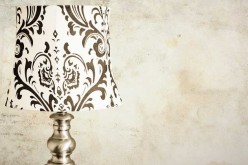
Fine-line botanical illustrations, heritage-inspired damask at a reduced scale, and delicate geometric repeats all fall into this category. These patterns create visual texture without visual noise. They make walls interesting without competing with artwork, furniture, or the view through a window.
The appeal is also practical. Small-scale prints are more forgiving to hang—minor misalignments are less visible, and they tile more gracefully around doors and windows. For a first wallpaper project, a refined small-scale print is a confident, low-risk entry point.
Jemma Cave of de Gournay points toward “smaller-scale, heritage-driven motifs” as a defining direction for 2026, noting a preference for designs with “a distinctly hand-painted quality and tactile texture.”
This hand-crafted quality—even when achieved through digital printing—gives small-scale wallpaper a warmth that flat paint simply cannot replicate.
Layering Pattern With Confidence
The anxiety around mixing patterns is largely unfounded, provided a few simple principles guide the choices. Wallpaper is rarely the only pattern in a room; it coexists with upholstery fabric, window treatments, area rugs, and decorative cushions. The key is calibrating those relationships so each element holds its own without drowning the others out.
A botanical wallpaper with a medium-scale repeat, for instance, pairs comfortably with a sofa upholstered in a solid linen or a tight weave—something that contributes texture without adding another competing print.
Tapestry-style art works beautifully in a wallpapered room because the art functions as a framed focal point rather than a repeating pattern; the two occupy different visual registers.
Patterned drapery alongside a wallpapered wall requires more deliberate coordination. The most reliable approach: keep the drapery in the same color family as the wallpaper but vary the scale of the pattern significantly. A fine-striped curtain against a large-scale botanical reads as complementary rather than chaotic.
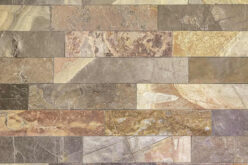
Todd Nickey of Nickey Kehoe recommends textured wall surfaces—grasscloth, linen weaves, woven finishes—as a particularly effective foundation for layered rooms because they “add depth and warmth to a room without demanding attention.”
A textured neutral wallcovering acts like a quiet host: it sets the atmosphere without overpowering the guests.
Katie Kime of Katie Kime Design makes the case for stripes as a layering tool, noting that they “allow you to layer many patterns in a room without it feeling overwhelming.” Stripes are among the most compositionally stable patterns available—predictable enough to anchor a space, graphic enough to make it interesting.
Practical Considerations For Modern Wallpaper Installation
The practical barriers that once made wallpaper feel like a major commitment have largely dissolved. Peel-and-stick and removable wallpaper formats have expanded the market considerably, allowing renters and those in transitional living situations to transform a space without risking their security deposit or committing to a permanent change.
Non-woven substrates—a growing category that is expanding at a 5.52% CAGR through 2031 (Mordor Intelligence, 2026)—cut installation time by approximately 25% compared to traditional paste-the-wall methods.
These materials use zero-VOC adhesives, making them well-suited to bedrooms, nurseries, and other spaces where indoor air quality matters.
For larger or more complex installations, sampling first is always worth the additional step. Augmented reality tools on platforms like Wayfair now allow shoppers to preview patterns at scale before purchasing, reducing the mismatch that leads to returns and disappointment.
Order physical samples regardless—screen colors and actual printed colors can differ meaningfully depending on your room’s lighting conditions.
Ceiling applications—sometimes called the “fifth wall”—are gaining traction as a way to extend a design concept beyond four walls and make a room feel fully conceived rather than partially finished. Even a subtle textured wallcovering on the ceiling adds a dimension that most painted rooms simply lack.
something of interest below
From Blank Canvas to Masterpiece: A Guide to Wall Decor Elements
Wall decorating is one of the most effective ways to transform a house into a home. It is where you get to tell your story, display what you love, and create an atmosphere that welcomes you back after a long day.
Your Walls Deserve a Decision
The rooms we return to every day shape our experience more than we often acknowledge. A wall that simply exists—flat, colorless, undecided—is a missed opportunity for something genuinely meaningful.
Botanical wallpaper that brings the feeling of a garden indoors. A small-scale print that rewards a closer look. A textured grasscloth that makes the afternoon light look different at 3 p.m. than it did at noon.
Wallpaper’s comeback isn’t a trend in the fleeting sense. It reflects a broader shift toward interiors that feel inhabited rather than staged—spaces that carry evidence of real aesthetic choices made by the people who live in them.
The patterns are better, the materials are smarter, and the installation options are more accessible than ever.
Start with one wall. Order a sample. Hold it up to the light in your space at different times of day. The rest tends to follow naturally from there.
Frequently Asked Questions
-
Is wallpaper coming back in style in 2025 and 2026?
Yes. Wallpaper is experiencing sustained growth and renewed design relevance. The global wallpaper market is projected to reach USD 16.64 billion by 2031, with residential demand growing faster than commercial applications.
Designers and homeowners are increasingly using wallpaper to create rooms that feel textured, personal, and atmospherically distinct.
-
What wallpaper patterns are most popular in 2026?
Botanical and floral patterns remain dominant, particularly moody, layered compositions with atmospheric depth.
Textured surfaces—grasscloth, linen weaves, plaster effects—are also trending, alongside heritage-inspired motifs like damask and toile rendered in updated, softer palettes. Scenic murals and panoramic wall treatments are gaining ground in dining rooms and primary bedrooms.
-
Can peel-and-stick wallpaper look as good as traditional wallpaper?
Quality peel-and-stick wallpaper has improved significantly. Non-woven formats with realistic textures—linen, grasscloth, plaster—are now difficult to distinguish from traditional installations.
For renters or those wanting flexibility, peel-and-stick formats offer a practical solution without sacrificing the visual impact of a wallpapered room.
-
How do you mix wallpaper with patterned textiles without the room looking cluttered?
The safest approach is to vary the scale of patterns significantly. A large-scale botanical wallpaper pairs well with fine-stripe curtains or solid-textured upholstery.
Keeping patterns in the same color family while varying their scale creates cohesion. Tapestry-style art and patterned rugs work well alongside wallpaper because they occupy different visual planes in the room.
-
What rooms are best for wallpaper in a modern home?
Any room benefits from wallpaper, but dining rooms, primary bedrooms, entryways, and home offices are particularly well-suited.
These are spaces where a strong visual identity creates a memorable impression without the practical wear concerns that kitchens or bathrooms might present (though moisture-resistant options exist for those spaces too).
-
Is small-scale or large-scale wallpaper better for a small room?
Both can work, but the choice depends on intent. Small-scale prints are more forgiving and create refinement without overwhelming a compact space.
Large-scale patterns can make a small room feel intentional and dramatic—almost jewel-box-like—when applied thoughtfully. Sampling in the actual space before committing is the most reliable way to evaluate scale.
home improvement ideas to consider (complete directory – new win):


| Category | Details | Trends and Statistics | Practical Tips |
|---|---|---|---|
| The Wallpaper Renaissance | Wallpaper is experiencing a design renaissance, driven by demand for personalized, texture-rich interiors. New patterns, textures, and peel-and-stick formats make it more accessible and versatile than ever before. | The global wallpaper market is projected to grow from USD 13.07 billion in 2025 to USD 16.64 billion by 2031, with a 5.14% CAGR in residential demand. | Consider starting with an accent wall or peel-and-stick versions for flexibility, especially in rented spaces. |
| Botanical and Floral Wallpaper | Moody florals with atmospheric depth and vintage-inspired garden patterns dominate. Large-scale leafy prints create naturalistic effects, while verdant greens function like neutral backdrops. | Botanical and floral designs are among the leading categories for 2026. Earthy tones and layered foliage patterns capture growing consumer preferences for warmth and sophistication. | Pair dense botanical wallpapers with complementary textiles; add earth-tone curtains or jute rugs for a cohesive design. |
| Small-Scale Prints | Small-scale botanical and geometric prints add refinement, visual texture, and a hand-painted aesthetic to walls without overwhelming other design elements. | Designs with heritage-inspired and tactile qualities gain traction. These patterns are practical for first-time users as they are forgiving to align and ideal for tighter spaces. | Use small-scale prints in compact rooms to create soft, interesting textures. Combine with understated furniture and decor to highlight contrasts. |
| Layering Patterns | Layering wallpaper, upholstery, and curtains in cohesive scales and color families creates depth. Textured wallcoverings like grasscloth are versatile foundations for dynamic spaces. | Highlighted by top designers in 2026, mixing patterns with varied scales and matching tones elevates cohesion in interior designs. | Focus on varying scale rather than adding loud prints. Neutral or complementary tones ease pattern interplay. |
| Modern Installation Techniques | Peel-and-stick and non-woven wallpapers have revolutionized the market. Zero-VOC adhesives and AR preview tools simplify design decisions and processes. | Non-woven substrates are growing at a 5.52% CAGR, with quicker and cleaner installation methods broadening wallpaper appeal. | Order samples to evaluate lighting effects. Consider installing wallpaper on ceilings for added dimension. |

Find Walls & Ceiling Services (opens new win) Drywall Installation Ceilings Painting & Texturing Tile top-rated, pre-screened local contractors Wallcoverings Ceilings – Fans Walls – Exterior Walls – Interior FREE: download contractor selection enter zip code – powered by HomeAdvisor ™


Image credit: wallpaper trends by envato.com
end of post … please share it!
Abstract Wall Paper
Animal Wallpaper
Botanical Wallpaper
Children Wallpaper
Geometric Wallpaper
Illustration Wallpaper
| more photo remodeling |
Jump Over to Our Photo Analysis Center for Ideas on
"Renovating Home"
|__________________________________________________________|
home remodeling surprise
find out where it might go - new win


Helpful article? Leave us a quick comment below.
And please share this article within your social networks.