Living rooms tend to collect more loose items than people expect—blankets get tossed over couches, remotes disappear into cushions, books pile-up on side tables, and chargers accumulate.
Storage can help, but it needs to fit how the room is actually used. What works in a small apartment may not work in a busy family setting.
- post content
- Before Style, Start With Function
- Measure the Space…Then Measure It Again
- Decide Between Open and Closed Storage
- Match Storage to Daily Habits
- Choose Flexible Pieces
- Keeping Visual Clutter in Check
- conclusion
- view notes:collective tips
- shop:home storage solutions
- view ideas:latest remodeling analysis
Before Style, Start With Function
Before you start comparing finishes, door styles, or display shelves, pause and ask what in this room actually needs a place to go?
That answer usually tells you more than decor trends will. For instance, a reading room may only need a bookcase, and maybe a slim cabinet. A TV-centered room might need a lot: better cord controls, space for media gear, and deep compartments. Some stuff can surely be moved to storage elsewhere.
Make a Quick Inventory
List what usually lives in the room:
- Books and magazines
- Throws and pillows
- Media equipment
- Toys or games
- Chargers, remotes, and small electronics
- Decorative objects that should stay visible
Storage choices get easier once you have a list. You can tell what needs to stay close, what can be tucked away, and what isn’t necessary at all.
when space is tight

Maximizing Space: Smart Storage Ideas for Small Homes
Living in a small home or apartment has its charm, but finding enough storage can be a real challenge.

Measure the Space… Then Measure It Again
A lot of storage mistakes start here.
Something that looks compact in a picture online can be deceptive. There are also spatial issues hard to foresee: a low media unit might fit the wall, but block a vent or make the walkway feel cramped.
Pay attention when measuring:
- Wall width and height
- Depth available around walkways
- Clearance for doors, drawers, and nearby seating
- Visual sightlines from the main seating area
In a living room, scale matters almost as much as square footage.
Decide Between Open and Closed Storage
Most living rooms need some of both.
Open living room storage is good for the things you reach for often and for anything that adds warmth or personality to the room. Closed storage handles the less attractive stuff: cords, board games, spare batteries, manuals, and all the random little items that make a room feel cluttered fast.
Open storage works best for:
- Books that get used often
- Framed photos or art objects
- Baskets for lightweight everyday items
- Plants, candles, or a few decorative accents
Closed storage works best for:
- Media accessories
- Extra linens
- Children’s items
- Paper clutter
- Anything mismatched, bulky, or awkwardly shaped
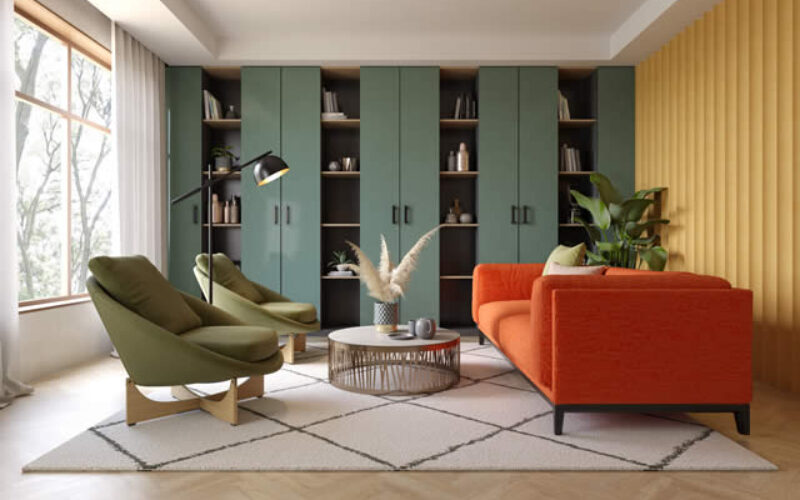
The best setups don’t lean too hard one way. For example, too much open shelving makes rooms feel busy, while too many closed cabinets can make a room feel heavy. Visual clutter has far-reaching effects, so a mix usually looks better and works better.
perhaps something custom or a special find

Finding and Building Home Storage Solutions
Adequate storage is the cornerstone of a well-organized home, warding off clutter and promoting an atmosphere where peace and productivity can flourish.
Match Storage to Daily Habits
If keys, chargers, or earbuds keep ending up in the living room, give them a real landing spot. If blankets come out every night, keep a basket or drawer nearby. And if kids use the room every day, the storage has to be easy for them to use too, not just nice to look at.
Try asking:
- What gets left out every day?
- What only gets used once or twice a week?
- What needs to be hidden quickly when guests come over?
- Who needs to reach this storage most often?
Storage that works with routine tends to last. Storage that ignores routine usually ends up being decorative more than useful.
Choose Flexible Pieces
Smaller living rooms benefit from versatile furniture. A storage bench can hold throws and add seating. A console behind the sofa? It can define the space while holding baskets underneath. Narrow cabinets keep media accessories out of sight without dominating space.
For compact living rooms, it helps to look for:
- Vertical storage that uses wall height
- Pieces with concealed compartments
- Furniture that serves two purposes
- Storage with a lighter visual profile
Pieces with legs, open bases, or slimmer frames usually feel less bulky – even when they still offer useful storage inside.
Keep Your Home Clutter-Free
Piles of jackets, coats, hats, and shoes can make an entryway (and living room area) feel chaotic and unwelcoming. To create a more organized space, consider storage solutions that blend function with style.
Wall-mounted coat racks, storage benches with hidden compartments, and sleek shoe cubbies are all great options.
You can also add decorative hooks or baskets for a personal touch while keeping your essentials handy.
By integrating these solutions, you can transform your entryway into a tidy, appealing space that sets a warm tone for the rest of your home.
view ideas: outerwear storage solutions (new win)

Keeping Visual Clutter in Check
Even good storage looks messy when everything stays exposed. Baskets, trays, and covered boxes help group items together and reduce unsightly clutter, making the room feel calmer.
Another helpful rule: leave breathing room. Not every shelf needs to be full. Every cabinet doesn’t need decor, some empty space keeps rooms from feeling crowded.
Final Thoughts
Good living room storage should make everyday life easier, reduce visual clutter, and fit the space, without creating new frustrations.
Start with function. Measure carefully. Then choose storage that fits actual habits. Your living room will feel more settled, more usable, and easier to maintain.
other related analysis of interest: (new win)
How to Create a Beautiful Edible Landscape
Adding a New Driveway? Pick The Right Material For Your Home
Find Home Remodeling Services Additions Major Remodels Minor Remodels Disability Needs top-rated, pre-screened local contractors FREE: download contractor selection enter zip code – powered by HomeAdvisor ™


Image credit: by envato.com
end of post … please share it!
| more photo remodeling |
Jump Over to Our Photo Analysis Center for Ideas on
"Renovating Home"
|__________________________________________________________|
home remodeling surprise
find out where it might go - new win


Helpful article? Leave us a quick comment below.
And please share this article within your social networks.