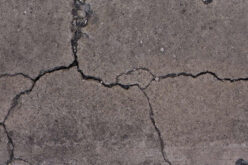
Weather elements, especially rain, may also hasten the deterioration of concrete driveways. Likewise, abnormal live loading may accelerate wear and tear.
It would help if you watched out for telltale signs of substantial damage so that you take action immediately. Failure to take remedial action may turn minor problems into extensive ones.
With that in mind, here are six signs your concrete driveway needs to be repaired:
1. Deep, Wide, Or Long Cracks
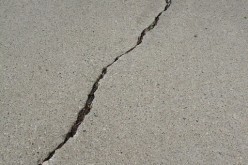
It’s natural for concrete structures to crack superficially. This is usually a result of expansion and contraction due to alternating cold and hot temperatures.
Such cracks are usually not more than ¼ inch wide and deep. And they shouldn’t be a cause of worry. A light sealing with mortar is enough to prevent water from seeping into the concrete structure.
But should you see any crack deeper and wider than that, then you might need to enlist the help of a professional to diagnose the issue.
If you’re in Colorado Springs, competent concrete specialists, such as Pro Angle Concrete or other similar ones, should be able to advise you on exactly what needs to be done.
Some cracks can be repaired locally at the spot of occurrence. But others may necessitate the construction of a new driveway altogether.
2. Pooling Water
A structurally sound concrete driveway should perfectly drain water away from its surface. Thus, when you notice water pooling in certain sections whenever it rains, it indicates caving in of the slab.
This might be a result of water seeping into the subbase through cracks. The subbase material, which is usually soil, erodes or weakens. Subsequently, the concrete surface sinks under the weight of vehicles.
This defect can be repaired by slab-jacking or concrete leveling – techniques wherein grout is injected under the slab to fill voids and offer uniform support. It’s a technical undertaking, and thus, you must work with an experienced contractor.
3. Numerous Potholes
Potholes are depressions or hollows on the concrete driveway. The more they are, the more challenging it gets to drive. They’re usually caused by the following:
- Wear and tear as a result of car tire friction
- Direct beating by hailstones
- Alternate freezing and thawing of water in surface cracks
- An insufficiently compacted sub base
- Poor drainage
- Improper patching
- Deicing salt eating away the concrete

driveway paintmobile basketball system
some driveway fun ideas to consider
Depending on their quantity and size, your contractor may recommend either resurfacing or building a new concrete driveway from scratch. You wouldn’t want to leave them as they are because they absorb water and pass it to the foundation below.
This leads to even worse problems, such as the entire concrete driveway crumbling away.
4. Ruts
The chances are high that you always drive along and park in the same spot. This means that these particular areas consistently bear more load than the others. As such, you might end up with sunken channels or grooves where the car tires pass. These are known as ruts.
You’d want to fix the issues as soon as possible before it evolves into a serious one. Ruts also encourage water stagnation on the concrete driveway, which is a notorious cause of deterioration.
5. Chipped Edges
A concrete driveway is prone to getting chipped along the edges. Any significant impact along the border may cause irregular concrete blocks to break away from the main slab. If left unchecked, the damage may gradually encroach inwards and destroy a large area of the driveway.




Ideas for Home Exterior
Collection of Home Exterior Analysis addressing driveways/walkways, garage, home siding, exterior decor, roofing and gutters, and front porch systems.
Remember that concrete is a mixture of cement, coarse aggregates, fine aggregates, and water. It can only stay intact if the surface is even. But when the coarse aggregates get exposed, car tires can easily knock them off one by one and extend an otherwise minor defect. So, please make a point of fixing chipped edges as soon as they occur.
6. Discoloration
Your concrete driveway may have color differences, unsightly stripes, dark spots, or blotchy areas. These are all signs of damage. Such discoloration may result from:
- Inconsistent mixtures
- Use of too much or insufficient water when mixing concrete
- Construction using low-quality cement and aggregates
- Poor workmanship
- Compromised curing process
- Addition of calcium chloride to accelerate setting
Note that discoloration isn’t only an aesthetic issue. It may lead to structural deterioration, and that’s why it’s critical to fix the problem as soon as you notice it.
other related articles of interest:
Repair Your Driveway in 3 Simple Steps
Closing the Cracks: 4 Things to Look For When Repairing Your Foundation
Conclusion
When you see the above signs on your concrete driveway, don’t wait for too long before taking action. Call a competent specialist at once for further diagnosis and advice on what needs to be done.
Fixing such issues before they spiral out of control saves you a lot of money. And keeping your concrete driveway in good condition is a surefire way of improving your curb appeal.
Find Driveway/Walkway Services Driveways Walkways Steps Concrete top-rated, pre-screened local contractors FREE: download contractor selection enter zip code – powered by HomeAdvisor ™

Image credit: by twenty20.com
end of post … please share it!
@import url(https://www.letsrenovate.com/ideas/wp-content/themes/novomag-theme/css/responsive/menu.css)
|__________________________________________________________|
home remodeling surprise
find out where it might go - new win


Helpful article? Leave us a quick comment below.
And please share this article within your social networks.