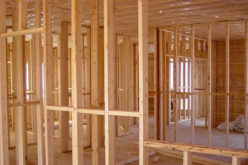
The following are a few tips to help you evaluate a potential contractor before hiring them to work on your home.
Learn About the Contractor
The Internet offers unlimited ways to research a contractor. You can look at their website and read reviews left by customers. Several third-party review sites can give you an unbiased view of what the contractor is like to work with.

Social media is also a good way to learn about a contractor before signing on the dotted line. However, nothing can replace good old-fashioned word-of-mouth.
Talk to your friends and see which contractors they have liked working with.
Take the time to interview the contractor. You want the interview to be done when you choose and use the communication medium you are convenient with.
Do not try to ask questions off-the-cuff. Instead, write down a list of questions you want to be answered in advance. Some questions to get you started could include:
- Do you take projects of all sizes?
- How many projects do you have going at the same time?
- How long have you worked with your subcontractors?
- For larger projects, will you use 3D laser scanning services to take the guesswork out of the project and make sure that every decision is made based on hard facts?
Getting the answers to these questions will give you an overview of what the contractor is like and what they bring to the table. You can decide if you want to pursue the business relationship further and schedule a face-to-face conversation.

some kitchen remodeling ideas to consider
Questions to Ask During a Face-To-Face Meeting
After doing your due diligence, pick a couple of contractors and meet them face-to-face. Ask specific questions about the estimated cost and time of completion.
Evaluate their body language. A contractor should easily be able to answer your questions in a way that makes you feel comfortable.
Do your due diligence. If you are happy with your face-to-face meeting with the contractor, check with the Better Business Bureau and see what type of reputation the contractor has there. If they have a history of multiple disputes with clients or subcontractors, it may be time to walk away.
advertisement
Collect the Facts in One Place
Your investigation process may take a couple of weeks. Collect the information you have gathered and write it out on a spreadsheet or in a notebook.
If possible, visit a current job site and evaluate how the contractor works. Are they safe? Is the job site neat? How do contractors and subcontractors interact with the homeowner and the homeowner’s property?
Once you are satisfied with a couple of contractors, you need to evaluate what is needed for the work. Ask for bids. Ask each company to give you a breakdown of the cost of materials, profit margins, labor, etc.
other related articles of interest:
How Contractor License Bonds Protect Contractors, Clients, and Employees
As a rule of thumb, materials should be 40 percent of the cost. The 60 percent extra should include profit margin, overhead, and other expenses incurred by the contractor.
Once you have narrowed it down to your contractor of choice, discuss a payment schedule. Think twice before giving 50 percent upfront.
Contractors who ask for this are usually tight on cash or worried that you are going to walk away from the deal once you have seen the completed project. A better rule of thumb is to offer 10 percent when contract signing, three evenly spaced payments of 25 percent, and then the final 15 percent once the job is complete.
Find Home Remodeling Services Additions Major Remodels Minor Remodels Disability Needs top-rated, pre-screened local contractors FREE: download contractor selection enter zip code – powered by HomeAdvisor ™

Image credit: how to select the best contractor by envato.com
end of post … please share it!
|__________________________________________________________|
home remodeling surprise
find out where it might go - new win


Helpful article? Leave us a quick comment below.
And please share this article within your social networks.