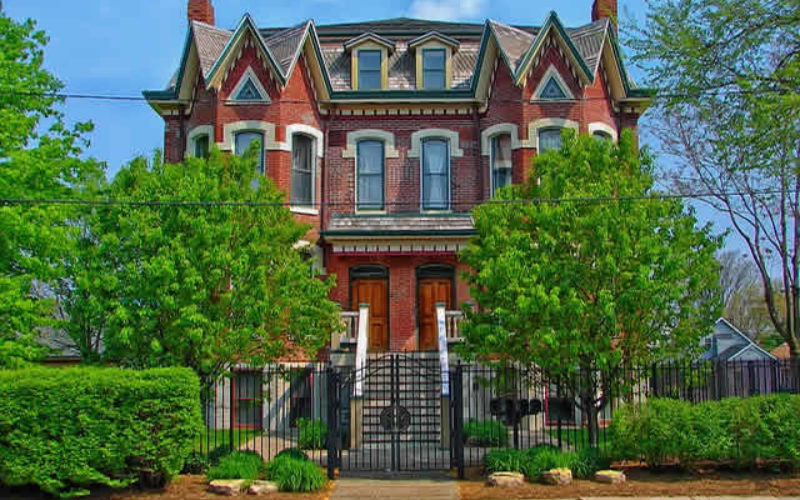
Still, the time and money you invest into a historic home can be well worth the effort. Living in a Victorian-era home resplendent in decorative trim and gorgeous turrets can feel like stepping back in time.
Whether you’ve just purchased a historic property or you’re currently searching for a home full of historical beauty and elegance, here are a few tips to keep in mind:
Find a Home Inspector with Experience

When it comes time to get a home inspection, you’ll want to select a professional who has experience with historic homes. An inexperienced home inspector may look at a historic home in the context of a modern home and nitpick over small details.
If your real estate agent has experience selling historic properties, chances are good they’ll know a home inspector or two who can properly evaluate your historic home. Ask them for a recommendation or check out the Historic Building Inspectors Association to find a qualified inspector.
Choose Contractors Wisely
Similar to your home inspector, you should choose contractors who specialize in older homes. If you need to fix your plumbing in a 1930s home, you’ll want a contractor who knows his way around older plumbing systems.
Also, keep in mind that restoring a historic home means trying to return its appearance to its original construction. Thus, it’s especially important to find a contractor who can interpret the home’s history and help match the interior and exterior to its time period.
Be Prepared for a Big Fixer Upper
If you have your sights set on a historic home, it goes without saying that you don’t mind a challenge. However, even the most determined homeowners can second-guess themselves after reading through the inspector’s report.
You already knew that the house needed some structural repairs. What you may not have known until the inspection was that you have a pest problem beneath the floorboards of your kitchen and the house needs significant electrical repairs to make it livable.
If you aren’t afraid of a project that will span months — if not years — then by all means, go for it. But if you thought this would be a small project, you may want to reconsider your choice of a historic home.

Start Small
Most people don’t have the luxury of staying in a second home while their newly-purchased historic home is being restored. If you don’t want to be miserable for months on end, start by tackling the most pressing issues first.
Tackling updates one by one will also help you spend money more wisely. It’s much better to invest in quality materials and experienced contractors on a single project than to spread yourself too thin. Likewise, if unwanted surprises come up, you’ll be able to tackle them without worrying about how you’re going to pay the mortgage.
Be Practical with Your Restoration
Understandably, one of the first things you probably want to do upon moving into your historic home is to enhance its beauty. As tempting as it is to fix the aesthetic things right away, it’s important to put function above beauty at first.
For example, water damage is a common problem with older homes due to aging plumbing systems. Water-related problems can be extremely costly and compromise the structure of your home, making it vital for homeowners to fix these issues as soon as possible. No matter how much your cabinets need work, they can wait until more pressing issues are resolved.
Popular Historic Neighborhoods in the U.S.
So do you think you’re ready to dive in and restore a historic home? Here are a few historical neighborhoods in the U.S. that are sure to charm with their unique beauty and history:
-
Charleston Historic District —
If you want to buy a home in historic Charleston, you won’t be disappointed in this charming Southern city. A perfect blend of modern amenities and rich, historical architecture, Charleston provides a small-town feel with big-city convenience. It’s no surprise that this city has been voted Best City in the United States by Travel + Leisure for six years running.

-
New Orleans French Quarter —
Renowned for its vibrant nightlife and 18th-century architecture, the French Quarter is the oldest neighborhood in New Orleans. Those who live in this historic neighborhood will love the many hidden garden courtyards, famous wrought-iron gates and 19th-century townhomes featuring architectural influences from early French and Spanish settlers.
-
Boston’s Beacon Hill District —
The oldest and most famous historic district in Boston, Beacon Hill is known for its many antique shops, narrow streets, expensive restaurants and historic charm. Lined with cobblestone streets and colonial-style homes, the city ensures that its historic neighborhoods remain historic by enforcing specific rules and guidelines for old homes and buildings. These rules apply to both commercial and residential properties.
-
Georgetown, Washington D.C. —
With its cobblestone streets and rows of historic townhouses and pre-revolutionary buildings, Georgetown has plenty of Instagram-worthy homes. This grand Washington D.C. neighborhood was once home to notable figures such as Thomas Jefferson, John Adams, Julia Child, Elizabeth Taylor and John F. Kennedy.
-
San Antonio’s King William Historic District —
Beautiful and romantic, the King William Historic District is steeped in history. Once owned by the Alamo, the area is now one of the most beautiful historic neighborhoods in Texas and is full of Greek Revival, Victorian and Italianate architecture.
Find Home Remodeling Services Additions Major Remodels Minor Remodels Disability Needs top-rated, pre-screened local contractors FREE: download contractor selection enter zip code – powered by HomeAdvisor ™


Restoring Your Historic Dream Home
It takes a significant amount of time, money and energy to restore a historic home. If you have little patience for home improvement projects or want to make dramatic changes to the original design, a historic home may not be the best fit for you.
For those who love the process and look forward to the journey, fixing up a historic home could be an excellent decision. With these tips, you can start off on the right foot and begin restoring your home to its former glory days.
other valuable tips:
Image credit: Pixabay
end of post … please share it!
| google+ |
REMODELING STEPS: step1 – analyze the number
|__________________________________________________________|
home remodeling surprise
find out where it might go - new win


Helpful article? Leave us a quick comment below.
And please share this article within your social networks.