Summary Outline –
Good Friday is a solemn and sacred day for Christians worldwide. It commemorates the crucifixion of Jesus Christ, an event central to the Christian faith.
Falling on the Friday before Easter Sunday, this day reflects on sacrifice, redemption, and unconditional love, as believers remember Jesus’ ultimate act of laying down His life for humanity.
For centuries, Christians have gathered on Good Friday to meditate on the suffering Jesus endured and the magnitude of His gift. But to fully grasp the significance of Good Friday, we must understand not only the spiritual dimension but also the historical and cultural context of crucifixion in ancient Rome.
This Easter article explores the origins of crucifixion, its use within Roman society, the deeply impactful account of Jesus’ crucifixion, and the theological meaning that has shaped the faith of millions. We will also look at how Good Friday is observed across the globe today.

-
- —— begin first topic ——
-
1st Good Friday: Historical Context of Crucifixion
Crucifixion is one of the most infamous methods of execution in recorded human history. It represents the intersection of power, ritual, and public demonstration in the ancient world.
Its use spanned continents and cultures, emerging as a particularly grim artifact of political, social, and military dominance. Understanding the historical development of crucifixion sheds light on its role as more than just a method of death, but as a calculated tool of fear and psychological control.
-
Origins of Crucifixion
The practice of crucifixion as a method of execution likely has its roots in the ancient Near East, with early forms observed as far back as the 6th century BCE. Empires such as the Neo-Assyrians and the Persians employed this brutal technique, often binding or impaling individuals on wood or tree trunks as a means of administering justice or instilling fear.
Persian ruler Darius I made explicit use of crucifixion as a punishment for rebels and political enemies, and its application was documented in historical texts such as Herodotus’ "Histories." These early uses of crucifixion reveal both its punitive and propagandist objectives, aiming to deter opposition and maintain order in expansive empires.
-
Greek Contributions to the Practice
During the Hellenistic period, crucifixion gained further prominence as Greek rulers adopted and adapted the practice for their own governance. While earlier applications often placed more emphasis on impalement, the Greeks began to refine crucifixion into a distinct method of execution, one that emphasized prolonging suffering and visibility.
Renowned historian Diodorus Siculus corroborates its use in accounts of Alexander the Great, who reportedly ordered the crucifixion of thousands of prisoners following military victories to intimidate any dissent within conquered territories.
Greek utilization of crucifixion set a formative stage for its later evolution under the Romans. The Hellenistic influence underscored themes of civic control, where public executions served as a somber warning to subjugated peoples about the consequences of defiance.
-
Roman Domination and Institutionalization
The Roman Empire perfected crucifixion to serve as a powerful instrument of statecraft and control. Unlike their predecessors, the Romans systematically institutionalized crucifixion as an execution method primarily reserved for slaves, lower-class criminals, and enemies of the state.
Roman law viewed crucifixion as "poena servilis," or the punishment of slaves, underscoring its role in enforcing class hierarchies within the empire.
The process of Roman crucifixion reflected a terrifying degree of organization and psychological calculation. Victims were often beaten or scourged beforehand, weakening them physically and instilling fear among onlookers.
Crucifixions were carried out in highly public settings such as busy roads, city gates, or near battlefields to maximize the deterrence effect. The Roman historian Tacitus and the Jewish historian Josephus provide detailed accounts of crucifixion’s use during suppressions of rebellions, including during the revolt led by Spartacus and the Jewish War in 70 CE.
Perhaps the most historically significant application of crucifixion was its use for the execution of Jesus of Nazareth, an event pivotal to the Christian faith. Roman prefect Pontius Pilate presided over Jesus’ trial and crucifixion, using the act as a warning against insurrection in the volatile province of Judea.
This particular crucifixion resonated through history, evolving into a symbol of redemption and suffering for billions of followers worldwide.
-
Abolition and Legacy
The decline of crucifixion as a method of execution coincided with the spread of Christianity throughout the Roman Empire. Emperor Constantine, the first Roman Emperor to convert to Christianity in the 4th century CE, abolished crucifixion out of reverence for the crucifixion of Jesus. However, its legacy endures as a symbol of human suffering and state control.
Today, historical analyses and archaeological findings, such as the discovery of the crucified remains of a man named Yehohanan in Givat HaMivtar, shed light on the anatomical effects and methods of crucifixion.
These discoveries reinforce the understanding of crucifixion’s brutality while continuing to inform scholarly, religious, and cultural interpretations of this grim practice.
Crucifixion’s history is not merely one of punishment; it is a narrative deeply embedded in the politics and psychology of ancient civilizations. It remains an enduring subject of study, providing valuable insights into human behavior, governance, and the eternal struggle over power and control.
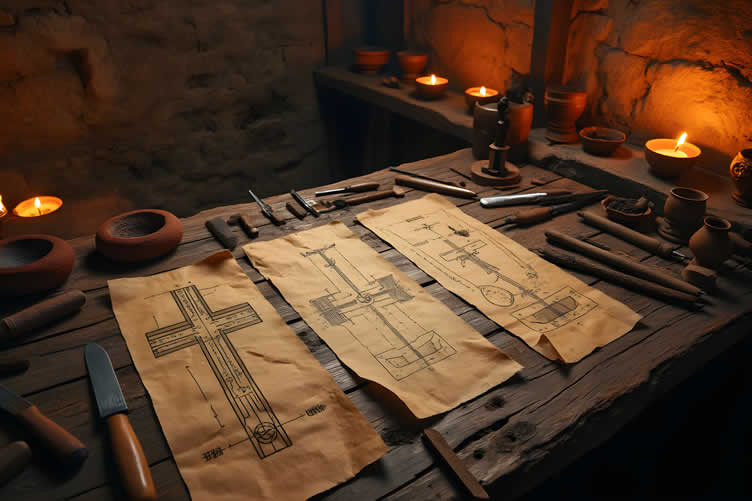
copyright image by 123rf.com
[ youtube: Crucifixion: Ancient Punishment ]
[ youtube: Crucifixion – Worst Punishments in the History ]
-
Scroll up to directory … or scroll to next section of the the true meaning of good Friday …


-
-
2nd Good Friday: How the Crucifixion Was Carried Out
The practice of crucifixion was a harrowing form of capital punishment meticulously designed to maximize humiliation, pain, and public deterrence. Its origins date back to ancient Persia but became more systemically developed under the Assyrians, Phoenicians, and eventually the Romans, who perfected it into a gruesome instrument of state power.
By understanding the stages of crucifixion, one can better grasp its physical and psychological impact on victims, as well as the societal contexts in which it thrived.
-
The Process of Crucifixion
Crucifixion was typically initiated with a brutal scourging of the condemned. Known as the "flagellation," this punishment involved the use of a whip constructed of leather thongs, often embedded with bone fragments or metal to maximize lacerations.
The scourging itself could be fatal, as it caused severe blood loss, shock, and exposure of muscle or bone. This stage served as a form of softening up the victim, both physically and psychologically, before the main act of crucifixion.
Following the scourging, the condemned was forced to carry the horizontal beam of the cross, known as the patibulum, to the site of execution. This element of public shaming was integral to the process, as it allowed onlookers to visit scorn and derision upon the weakened individual.
Historical and archaeological evidence shows that the patibulum could weigh between 75 and 125 pounds, a burden unimaginable for someone already gravely injured.
Upon arrival at the execution site, the patibulum was affixed to an upright post, or stipes, forming the cross. The victim’s hands were either tied or nailed to the crossbeam, with nails commonly driven through the wrist to bear the body’s weight without tearing.
The feet were similarly secured with nails or tied to the stipes. Some versions of crucifixion involved a small wooden seat or footrest to support the body, prolonging the agony.
-
The Length of Suffering
Once affixed to the cross, the condemned suffered a slow, drawn-out demise that could last for hours or even days. The primary cause of death was often asphyxiation, as the individual struggled to lift their body to breathe.
The positioning of the arms and body on the cross placed extreme stress on the diaphragm, enhancing the physical torment. Other contributing factors to death included dehydration, hypovolemic shock from blood loss, and infection caused by the open wounds.
Historical records suggest that Roman soldiers were instructed to expedite death when necessary. Techniques such as breaking the legs of the crucified, known as "crucifragium," were used to prevent the person from pushing themselves up for air. Additionally, spearing the side of the victim to pierce vital organs served as a method of confirming death.
-
The Final Moments and Death
The final hours of those crucified were marked by an unbearable combination of physical pain and emotional despair. Crucifixion was designed not only to punish but to strip the victim of their humanity. The public aspect of the spectacle amplified this humiliation, as individuals were left exposed to the elements, insects, and the scorn of passersby.
Death on the cross was not just the end of life but a statement of utter powerlessness under the governing authority. The recovery of the body was often denied to the family of the victim, leaving it to decompose or be scavenged by animals as one last act of indignity.
Understanding the methodology of crucifixion provides vital insights into the societal structures and values of the ancient world. Though a stark and somber subject, the study of this brutal punishment underscores the lengths to which power could and would go to enforce dominance and instill fear among its people.
Contemporary scholarship and archaeological discoveries have further enriched this knowledge, enabling a fuller understanding of one of humanity’s most harrowing practices.
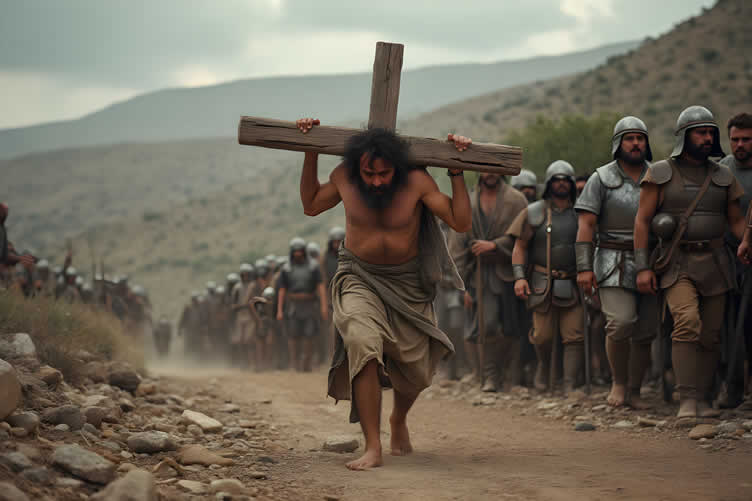
AI generated image by 123rf.com
[ view diagram: crucifixion diagram ]
[ youtube: What was crucifixion like? ]
-
Scroll up to directory … or scroll to next section of the the true meaning of good Friday …
-
-
3rd Good Friday: The Practice of Crucifixion in Roman Times
Crucifixion, as a method of capital punishment, was both a physical and psychological instrument of terror employed most notably by the Romans during their empire’s height.
Though its roots trace back to earlier civilizations such as the Persians and Carthaginians, the Romans refined crucifixion into one of the most notorious and prolonged forms of execution humanity has known.
Crucifixion, adopted by the Romans, was a method of execution reserved for those considered the lowest or most severe offenders. It was not merely a means of punishment but a powerful symbol of the Roman state’s absolute authority and the dire consequences of defiance.
Roman citizens were typically exempt from this harsh punishment unless charged with treason. More commonly, it was inflicted upon rebels, slaves, and the marginalized.
By examining the nuances of this practice, we gain insights into the logistical, societal, and political motives that drove its use in Roman times.
-
The Design and Execution Process
The Romans engineered crucifixion to prolong suffering and maximize visibility, reinforcing its deterrent effect. Victims were typically scourged prior to being crucified, a process designed to weaken their bodies and intensify the final punishment.
After scourging, victims carried the horizontal crossbeam, or patibulum, to the execution site. This act emphasized public humiliation, as crowds would gather along the route.
Wooden crosses came in various shapes — the most common being the crux commissa (T-shaped) and the crux immissa (the traditional cross shape associated with Christian iconography).
Victims were either tied or nailed to the cross, with nails driven through the wrists and feet to secure them in place. This positioning was carefully calculated to force an agonizing cycle of asphyxiation, as victims needed to push themselves up to breathe but endured excruciating pain in doing so.
Death by crucifixion was agonizing and prolonged. Victims often succumbed to a combination of asphyxiation, blood loss, and dehydration. The torment could last for hours or even days, reinforcing its reputation as the most excruciating of punishments.
The location of the crucifixion was as significant as its mechanics. Roman authorities often selected highly visible sites, such as hills, major roads, or city entrances, ensuring the condemned served as a living warning to onlookers.
The aim was less about punitive justice for an individual and more about asserting control over the collective masses.
-
The Purpose and Utility of Crucifixion
For the Romans, crucifixion served as both punishment and propaganda. The victims were often rebels, slaves, or criminals accused of severe offenses, with the punishment designed to strip them of dignity and humanization.
For rebellious provinces or enslaved populations, particularly during uprisings, the mass use of crucifixion reinforced Rome’s dominance.
Notably, after the suppression of Spartacus’s slave revolt in 71 BCE, an estimated 6,000 rebels were crucified along the Appian Way, a dramatic spectacle highlighting the consequences of insurrection.
This punishment was also a calculated psychological weapon. The humiliation of crucifixion — being displayed naked, suffering prolonged agony, and often left for birds and scavengers post-mortem — was intended to inspire fear and compliance.
The slow and public nature of death marked the condemned as a cautionary symbol, their suffering magnified as much by the witness of others as by the physical anguish itself.
-
The End of Crucifixion in Roman Practices
Despite its widespread use for centuries, crucifixion gradually declined by the 4th century CE after the rise of Christianity within the Roman Empire.
Crucifixion became associated with the execution of Jesus Christ, a key figure in Christian theology, leading to significant sensitivity surrounding the practice.
Emperor Constantine the Great abolished crucifixion in 337 CE, aligning with the moral and spiritual teachings of Christianity, which now played a prominent role within the empire’s cultural and legislative framework.
-
Reflections on Crucifixion in Roman Times
Through its refinement of crucifixion, Rome epitomized the instrumentality of punitive violence in consolidating power and instilling societal order. However, the cruelty of the practice also underscores the stark realities of ancient systems of control and punishment.
By understanding both the mechanics and the broader implications of crucifixion, modern observers can better appreciate the ways in which punishment systems shape societies and the human stories enmeshed within them.
The study of crucifixion not only provides a lens into the brutal realities of Roman authority but also serves as a reminder of humanity’s capacity for both suffering and resilience. The historical echoes of this practice can still be felt today, urging profound reflection on the interplay between justice, governance, and morality in any era.
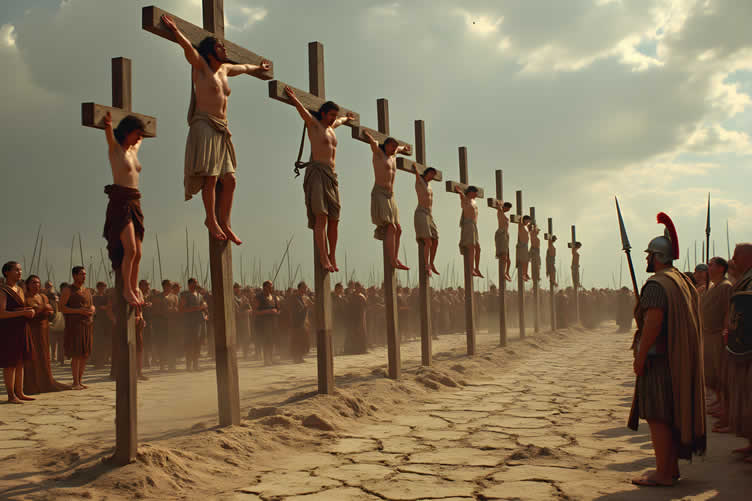
AI generated image by 123rf.com
[ youtube: Crucifixion: The Process and Logic ]
[ amazon: Researching Roman Crucifixion ]
-
Scroll up to directory … or scroll to next section of the the true meaning of good Friday …
-
-
4th Good Friday: The Crucifixion of Jesus Christ
The crucifixion of Jesus Christ stands as one of history’s most deeply explored and profoundly significant events.
According to the Gospels, Jesus was arrested, tried, and sentenced to death under the governance of Pontius Pilate, the Roman prefect of Judea. Although declared innocent by Pilate, Jesus faced the pressures of an unruly crowd calling for His crucifixion.
Jesus was scourged and mocked by Roman soldiers, who placed a crown of thorns on His head and a purple robe around His shoulders, mocking His claim as "King of the Jews". He was then compelled to carry His cross to Golgotha, the site of His crucifixion.
During His crucifixion, Jesus was nailed through His hands and feet to the crossbeam. He was suspended between two criminals, a symbol of humiliation. Despite His suffering, Jesus showed compassion, forgiving those who carried out His execution and granting salvation to a repentant criminal beside Him.
Jesus’ crucifixion culminated with His final words, "It is finished," signifying the fulfillment of His mission. His death, recorded as occurring around 3 PM, coincided with dramatic events such as a darkened sky and the tearing of the temple veil, which carried symbolic weight (Matthew 27:45-51).
For Christians, the crucifixion is not merely an execution but a divine act of redemption, as Jesus bore the sins of humanity to reconcile them with God.

copyright image by 123rf.com
[ view diagram: painting: crucifixion of jesus christ ]
[ youtube search: the passion of the Christ ]
-
Scroll up to directory … or scroll to next section of the the true meaning of good Friday …
-
-
5th Good Friday: Theological Interpretations and Symbolism
The crucifixion of Jesus Christ carries profound theological significance within Christian beliefs. At its core, it represents the ultimate act of atonement. By willingly offering His life, Jesus fulfilled the prophecy of the Messiah and bridged the gap between humanity and God caused by sin.
The cross has since become the foremost symbol of Christianity, embodying sacrifice, salvation, and hope. It reminds believers of God’s unrelenting love for the world and offers a path to eternal reconciliation.
Theologically, the crucifixion underscores concepts such as grace (undeserved favor), substitution (Christ taking humanity’s place), and forgiveness. This event is viewed as the culmination of divine justice and mercy, making it the focal point of Christian faith.
-
Good Friday Observances and Traditions
Good Friday is marked with solemnity and reflection, observed by Christians in various ways worldwide. Many churches hold services that recount the Passion narrative, which details the suffering and death of Christ through Scripture readings and hymns.
Some traditions include the Stations of the Cross, a contemplative practice where participants walk through a series of images or stops that depict Jesus’ path to crucifixion. Others observe moments of silence at 3 PM, commemorating the hour of Jesus’ death.
Fasting and abstinence are common practices among Catholics, along with the veneration of the cross, where the faithful show respect to a crucifix or cross as an act of devotion.
Beyond liturgical traditions, Good Friday often serves as a deeply personal day of prayer and reflection. It is a time for believers to meditate on the cost of salvation and the love demonstrated at the cross.
-
Reflecting on the Meaning of Good Friday
Good Friday is more than an observance; it is an invitation to reflect on the depth of Christ’s love and the cost of humanity’s redemption. For Christians, it serves as a reminder of the gravity of sin and the hope found in God’s grace through Jesus’ sacrifice.
The enduring significance of the crucifixion, from its historical roots to its theological implications, continues to inspire awe and devotion. It challenges believers to live in gratitude and extend the same love and forgiveness to others that Jesus exemplified on the cross.
This Good Friday, take a moment to reflect on the acts that changed history and eternity. Consider attending a Good Friday service or spending time in prayer to reconnect with its profound meaning.
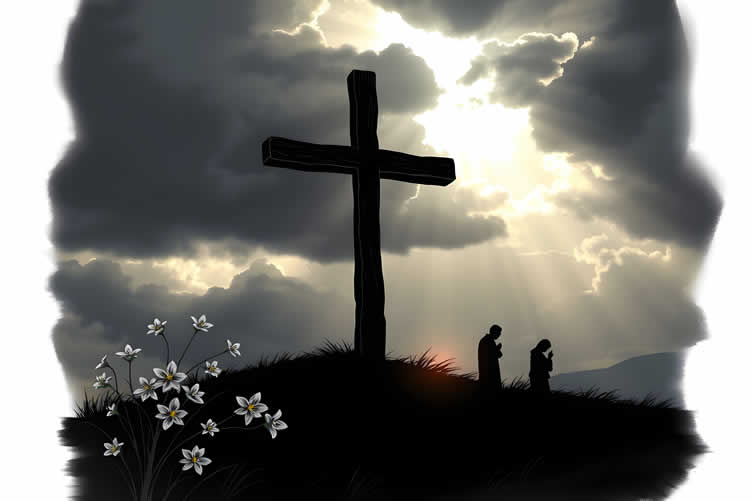
copyright image by 123rf.com
[ youtube: What’s So Good About Good Friday? ]
[ amazon: good friday decoration ]
-
Scroll up to directory … or scroll to conclusion …
-
-
Conclusion
Good Friday holds a deeply spiritual and reflective place in the hearts of believers, reminding us of Jesus Christ’s ultimate sacrifice and boundless love for humanity.
The crucifixion is not only a pivotal moment in history but also a profound symbol of redemption and hope. It calls us to live a life marked by gratitude, compassion, and forgiveness, mirroring the grace extended through His sacrifice.
As we reflect on this significant day, may it stir in us a renewed sense of faith and a deeper commitment to walk in His footsteps.
-
Quick scroll to more interior home and decor ideas …
-
ideas to view and compare from the photo above
- What comments can you share about
TERMPHRASE that you have installed?

addressing holiday celebrations and other home improvement needs …

… grab this directory of ideas for future use




… remodeling decisions


what might be of interest is reflecting on some …


SHARE IT ..! You might have someone in your social network who could find this informative of Good Friday meaning valuable. Feel free to share it on Facebook, X (formally Twitter), LinkedIn, or Pinterest!


Find Interior Design Services Decorators Interior Designers Furniture Painting & Staining top-rated, pre-screened local contractors FREE: download contractor selection enter zip code – powered by HomeAdvisor ™
Quick Contractor Guides selecting negotiating working with inspecting

Cover image credit: good Friday meaning by 123rf.com
end of post … please share it!
 |
did you find meaning of good Friday analysis helpful? If so, please share the article with your friends and family! |
Nice pic idea? Leave us a quick comment below.
And please share this pic idea within your social networks.