Quick Answer:
You don’t need a bigger closet to get more storage — you need a smarter one. Double-hanging rods, adjustable shelving, hidden storage solutions, better lighting, regular decluttering, and strategic folding techniques can transform even the tightest closet into an organized, functional space without any construction or costly renovations.
Summary Outline –
The good news is that a small closet doesn’t have to mean small storage potential. With a bit of strategic planning, your existing closet can hold more, look better, and function more efficiently than you’d expect.
Vertical space, smart organization systems, and a handful of affordable upgrades go a long way toward creating a closet that actually works for your lifestyle.
This guide walks through practical, budget-friendly closet ideas that maximize every inch of available space, starting with one of the simplest and most effective upgrades you can make.
- post content … analysis/ small bedroom closet
- 1st: Double Your Capacity With A Second Rod
- 2nd: Add Adjustable And Modular Storage Systems
- 3rd: Capture Hidden Storage You’re Already Overlooking
- 4th: Upgrade Your Lighting For A More Functional Closet
- 5th: Declutter Regularly Using The KonMari Method
- 6th: Use Smart Folding And Hanging Techniques
- 7th: Frequently Asked Questions
- 8th: Perhaps It’s Time For Something Bigger
- conclusion and references
- other bedroom-related topics

-
- —— begin first topic ——
-
1st Section: Double Your Capacity With A Second Rod
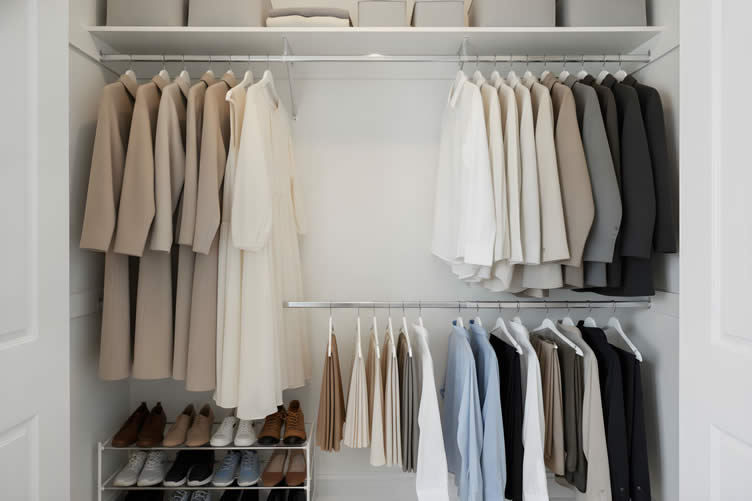
Installing a second hanging rod is one of the easiest ways to dramatically increase closet storage without changing the footprint of the space at all.
Most closets are built with a single rod positioned to accommodate full-length garments like coats and dresses, but the reality is that the majority of items in a typical wardrobe — shirts, folded pants, skirts — only need half that vertical clearance.
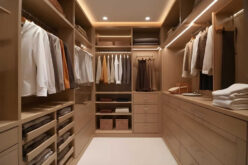
AI generated image by 123rf.com

-
Where To Position Your Double Rods[ view]
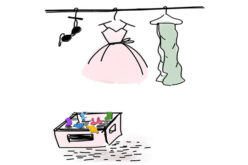
Placing a second rod beneath the existing one creates two distinct hanging zones. The upper rod works well for shorter items like blouses, folded trousers, and jackets, while the lower rod accommodates the rest of your short-hanging wardrobe.
A general guideline is to leave roughly 40 inches of clearance for the top rod and 40 inches for the bottom rod, adjusting based on your specific wardrobe mix.
-
Choosing The Right Hardware[ view]
Tension rods offer a no-installation option that’s ideal for renters, while permanently mounted rods provide more stability for heavier loads. Closet rod brackets with adjustable height settings allow you to fine-tune the layout as your wardrobe changes across seasons.
Whichever option you choose, test the weight capacity before loading the rod with heavier garments like coats or structured jackets.
-
Reserve One Section For Long Items[ view]
Not every part of the closet needs to be doubled up. Keeping one section with a single full-length rod ensures there’s still a dedicated spot for dresses, maxi skirts, and long coats that won’t fit in a shortened hanging zone.
This hybrid approach captures the benefits of double-hanging without sacrificing space for garments that genuinely need it.
More Supporting Information
(view summary table and useful ideas – or scroll to side note and next topic)
Topic Description Key Details Double Your Capacity With A Second Rod Adding a second hanging rod can significantly increase closet storage space without altering the closet’s footprint. Most closets are designed for full-length garments, but most wardrobes consist primarily of shorter items like shirts and skirts, which require less vertical space. Where To Position Your Double Rods A second rod below the existing one creates two hanging zones for more organized storage. General guidance recommends leaving about 40 inches of clearance for both the top and bottom rods, adjustable for individual wardrobe needs. Choosing The Right Hardware Select hardware based on durability, preferences, and wardrobe type. Tension rods are renter-friendly and require no installation, while mounted rods are better for heavier loads.
Adjustable brackets allow layout flexibility for seasonal wardrobe changes.
Reserve One Section For Long Items Maintain a section with a single full-length rod to store long garments like dresses and coats. This ensures long items have suitable storage while utilizing double-hanging benefits in other areas. 


AI generated image by 123rf.com
From Cluttered to Cozy
While updating your bedroom closet to maximize space and organization is a smart move, the rest of your bedroom deserves the same attention.
Consider small weekend updates like swapping out old bedding for fresh, inviting linens or adding soft lighting for a cozy ambiance.

Rearrange furniture to create more open flow or introduce a pop of color with new curtains or decorative pillows.
These simple changes can transform your bedroom into a more welcoming and relaxing retreat.
view ideas: Weekend Bedroom Upgrades(new win)

-
Scroll up to directory … or scroll to next section: modular storage systems …


-
… home remodeling and improvement

-
-
2nd Section: Add Adjustable And Modular Storage Systems
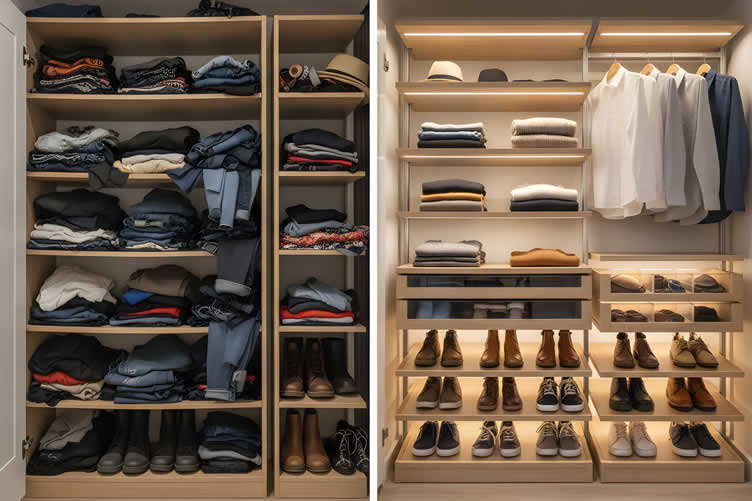
Fixed shelving asks your belongings to adapt to the space, when it should be the other way around. A shelf that sits too low for your bulky sweaters or too high for your everyday shoes can leave you stacking, squeezing, and rearranging just to make things fit.
Adjustable and modular storage solutions flip that relationship. They let you customize compartments around what you actually own, rather than relying on a generic, one-size-fits-all layout that never quite matches your wardrobe.
AI generated image by 123rf.com
-
Why Adjustable Shelving Matters[ view]
Adjustable shelving systems typically use a track-and-bracket design that allows shelves to move up, down, or out entirely.
This flexibility means you can create taller sections for bins and bulky sweaters, shorter sections for folded shirts, and open sections for shoe storage — all within the same closet footprint. As your wardrobe shifts seasonally, the shelves move with it.
-
Modular Units Grow With You[ view]
Modular closet systems are built from interchangeable components — drawers, cubbies, shelves, and hanging rods — that click or slide together.
Because each piece can be added, removed, or rearranged independently, you can expand the system over time rather than committing to an entire closet overhaul at once. This incremental approach also makes modular systems more budget-friendly than built-in custom closets.
-
Matching The System To Your Space[ view]
Before purchasing any adjustable or modular unit, measure the full width, depth, and height of your closet, including any obstructions like light fixtures or angled ceilings.
Many modular systems are designed to fit standard reach-in closet dimensions, but double-checking measurements prevents a frustrating return trip.
More Supporting Information
(view summary table and useful ideas – or scroll to side note and next topic)
Feature Description Benefits Adjustable Shelving Utilizes a track-and-bracket design allowing shelves to move up, down, or be removed entirely. Creates custom compartments for different items like bulky sweaters, shirts, and shoes.
Adjusts with seasonal wardrobe changes.
Modular Units Built from interchangeable components such as drawers, cubbies, shelves, and hanging rods that connect together. Can expand over time, offering flexibility and a budget-friendly alternative to overhauling the entire closet at once. Space Matching Requires precise measurement of closet dimensions, including width, depth, height, and obstructions. Ensures modular systems fit standard closet layouts and prevents issues needing returns or adjustments. 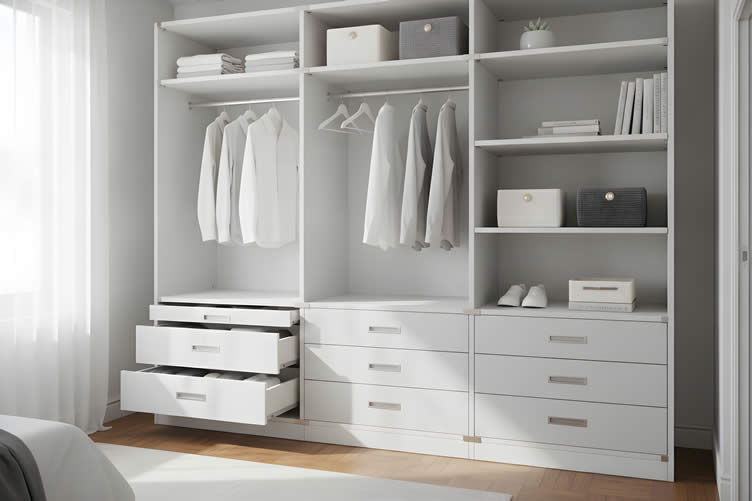
AI generated image by 123rf.com
Find Effortless Organization
One of the best options for overall closet organization is a modular closet system.
These systems make tidying up effortless by providing pre-built organization tailored to your space.
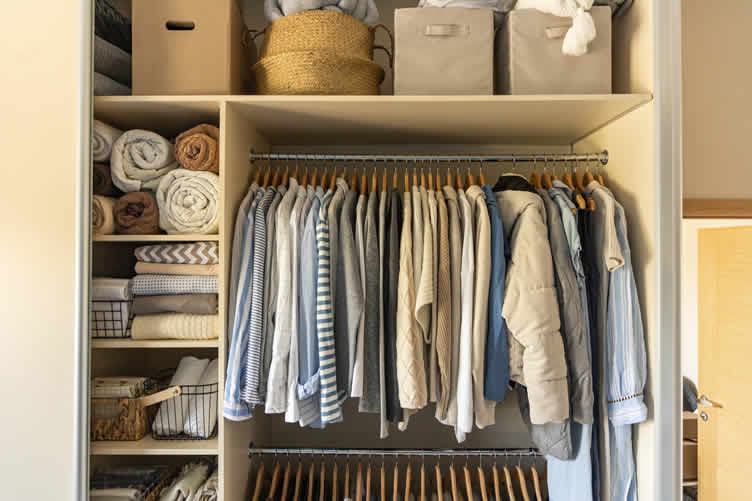
Simply measure your available area, and you’ll discover a modular setup that fits perfectly, offering shelves, drawers, and hanging spaces designed to maximize storage and keep everything within reach.
view ideas: About Closet Systems(new win)
-
Scroll up to directory … or scroll to next section: hidden storage …
-
-
-
-
3rd Section: Capture Hidden Storage You’re Already Overlooking
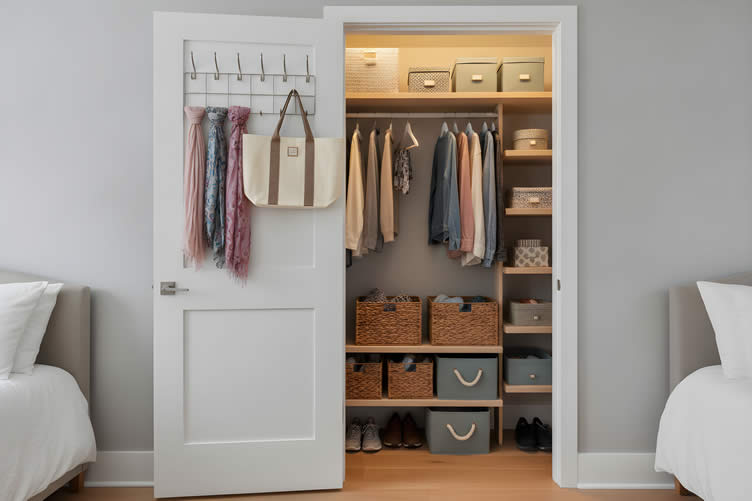
Every closet has storage space that goes unnoticed, such as the back of the door, the walls beside the hanging rod, and the dead space beneath shelves. These spots are easy to overlook because we tend to focus only on the main hanging area and shelves.
Hidden storage solutions put these forgotten areas to work, giving you extra room for the things that tend to pile up without requiring any expansion of the closet itself.
AI generated image by 123rf.com
-
Over-The-Door Organizers[ view]
Over-the-door shoe organizers, hook racks, and pocket systems are among the most efficient closet upgrades available because they require zero installation beyond a few hooks that hang over the top of the door.
These organizers work well for shoes, accessories, cleaning supplies, or small folded items that would otherwise clutter a shelf.
-
Wall-Mounted Shelving And Hooks[ view]
The walls flanking your hanging rod are frequently left empty, even though they can support narrow shelves, hook strips, or pegboard systems.
Wall-mounted storage is particularly useful for bags, belts, scarves, and other accessories that don’t fold or hang neatly on a standard rod.
-
Under-Shelf Baskets[ view]
Under-shelf baskets slide onto existing shelves and create an entirely new storage layer in the space between a shelf and the items sitting on it.
These baskets are ideal for small, loose items like socks, undergarments, or accessories that would otherwise slide around on an open shelf.
-
Vacuum-Sealed Bags For Seasonal Items[ view]
Vacuum-sealed storage bags compress bulky seasonal items like winter coats, comforters, or off-season bedding into a fraction of their original size.
Once compressed, these bags fit neatly on high shelves, freeing up prime closet real estate for items you use year-round.
More Supporting Information
(view summary table and useful ideas – or scroll to side note and next topic)
Storage Area Description Ideal Uses Hidden Closet Storage Utilizes overlooked spaces like the back of doors, walls beside hanging rods, and areas beneath shelves.
Provides extra storage without expanding closet size.
Extra room for piled-up items using smart storage solutions. Over-The-Door Organizers Shoe organizers, hook racks, and pocket systems that hang over the door without requiring installation beyond hooks. Shoes, accessories, cleaning supplies, and small folded items. Wall-Mounted Shelving and Hooks Narrow shelves or hooks mounted to walls flanking the hanging rod.
Re-purposes otherwise unused wall space.
Bags, belts, scarves, and other non-foldable or non-hanging items. Under-Shelf Baskets Slide onto existing shelves to create additional storage layers in unused vertical spaces. Small, loose items like socks, undergarments, and accessories. Vacuum-Sealed Bags for Seasonal Items Compress bulky items such as winter coats and bedding, significantly reducing their storage size and fitting them into high shelves. Seasonal items like coats and comforters, freeing up space for year-round essentials. 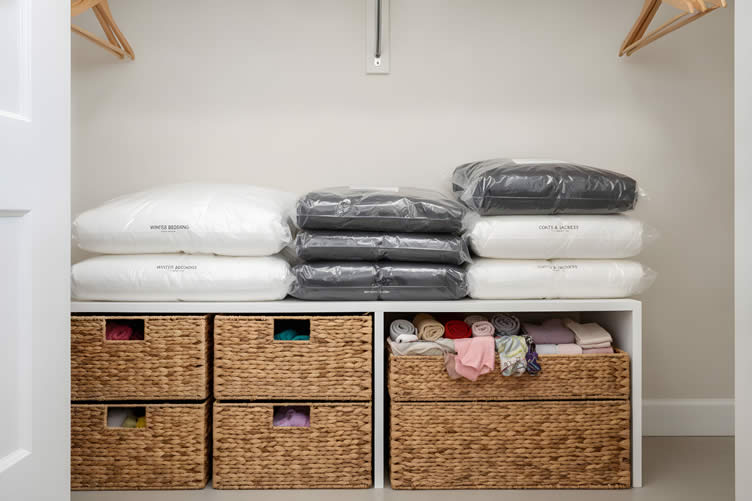
AI generated image by 123rf.com
Accessible Baskets for Effortless Organization
Accessible baskets are a game-changer when it comes to a tidy and functional closet.
Perfect for housing socks, underwear, or other small essentials, they sit neatly on shelves, making it simple to find what you need without rummaging.
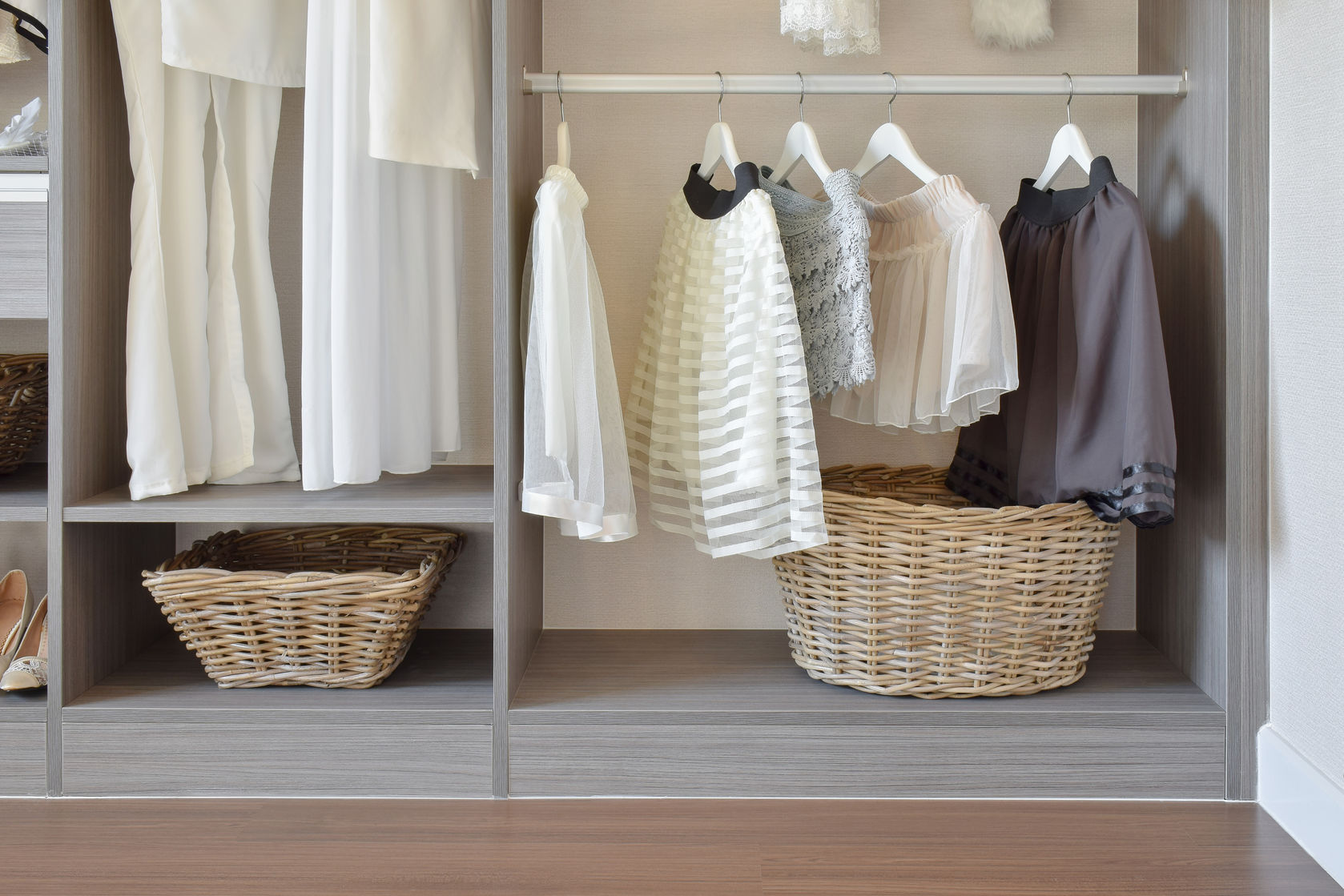
This frees up your drawers for larger or more critical items, optimizing your space.
Hyacinth baskets, in particular, stand out as an ideal choice — their natural texture and variety of sizes fit seamlessly into any closet layout while adding a stylish touch.
view ideas: Hyacinth Storage Baskets(new win)
-
Scroll up to directory … or scroll to next section: closet lighting …
-
-

Tackling home upgrades and fulfilling all your home improvement needs …

… save this curated directory of ideas for future reference.

-
-
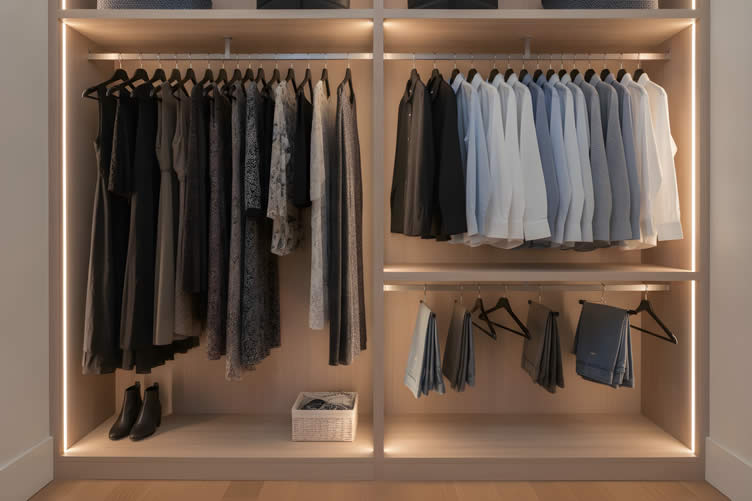
4th Section: Upgrade Your Lighting For A More Functional Closet
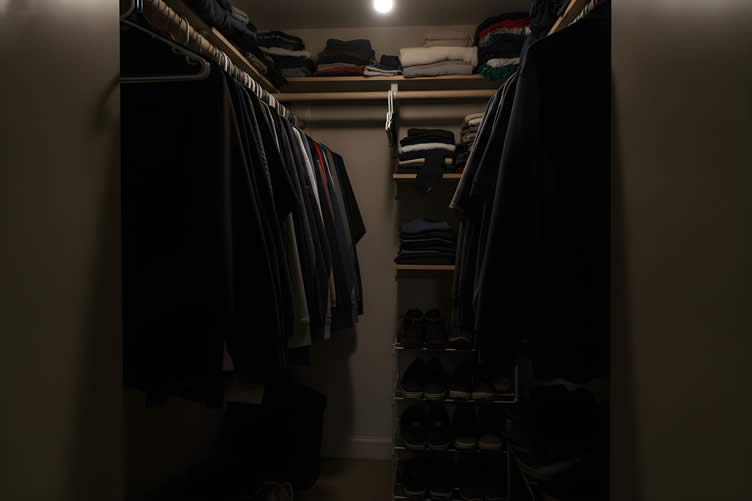
Poor lighting is one of the most overlooked factors in closet organization. A dim closet doesn’t just make it harder to find matching items, like that second black sock or the right pair of shoes.
It also quietly discourages the kind of regular maintenance that keeps a small space functional over time. When you can’t see clearly, tidying up starts to feel like a chore, and it’s all too easy to put it off for another day.
AI generated image by 123rf.com
-
Why Lighting Affects Organization[ view]
When a closet is difficult to see into, items get shoved into the nearest open spot rather than placed in their designated zone. Over time, this erodes any organizational system you’ve put in place.
Proper lighting makes it easier to see exactly what you own and where it belongs, which supports better habits every time you open the door.
-
LED Strip Lighting[ view]
Adhesive LED strip lights are an affordable, battery-powered, or plug-in option that can be mounted along the top or sides of a closet without any wiring.
They provide even illumination across shelves and hanging sections, eliminating the shadows that make it hard to distinguish navy from black at a glance.
-
Motion-Sensor Lighting[ view]
Motion-sensor lights turn on automatically when the closet door opens, which is especially useful for closets without easy access to a light switch.
This hands-free lighting also means the light won’t accidentally stay on and drain batteries when the closet is closed.
-
Clip-On And Battery-Operated Lamps[ view]
For a quick, no-commitment upgrade, a simple clip-on lamp attached to a shelf edge or rod can provide targeted light exactly where you need it most.
These lamps are inexpensive, require no installation, and can be repositioned as your storage layout changes.
More Supporting Information
(view summary table and useful ideas – or scroll to side note and next topic)
Upgrade Idea Description Advantages LED Strip Lighting Adhesive LED strip lights can be mounted along the top or sides of a closet, providing even illumination across shelves and hanging sections. Available in battery-powered or plug-in options, these lights require no wiring. Eliminates shadows, improves visibility, and makes it easier to distinguish colors like navy and black at a glance. Motion-Sensor Lighting Automatically turns on when the closet door opens, offering hands-free lighting that is especially useful for closets without easy access to a light switch. Prevents lights from staying on accidentally, saves energy, and adds convenience. Clip-On and Battery-Operated Lamps Simple clip-on lamps can be attached to a shelf edge or rod to provide targeted light where it’s most needed. Requires no installation and can be repositioned easily. Quick, inexpensive solution for adaptable lighting that suits changing storage layouts. 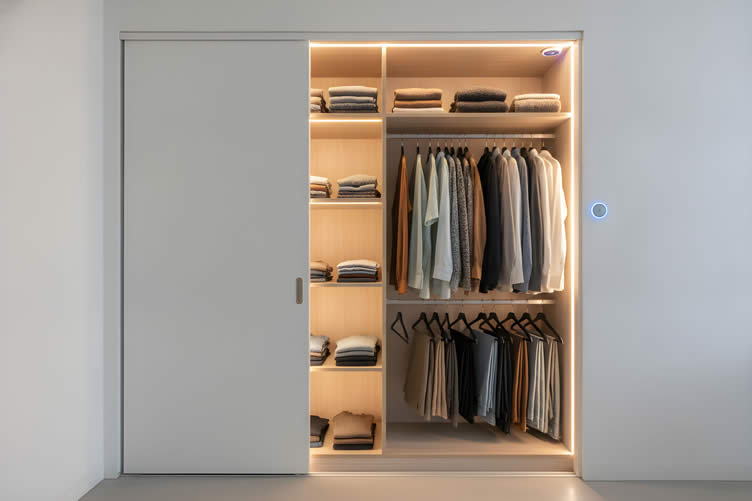
AI generated image by 123rf.com
Rethink Closet Lighting
You might think LED strip lighting is reserved for your kid’s room, but it’s time to see it in a whole new light.
The latest versions of LED strips offer sleek, versatile, and energy-efficient solutions that ordinary ceiling lights can’t match.

They’re perfect for illuminating your closet, providing even, shadow-free brightness that makes finding your favorite outfits effortless.
Modern LED strips combine style with practicality, proving they belong in every corner of your home—not just the kids’ rooms.
view ideas: LED Strip Lighting(new win)
-
Scroll up to directory … or scroll to next section: declutter regularly …
-
-
SHARE IT ..! Someone in your network might benefit from this insightful post about organizing a small bedroom closet to make it work bigger. Feel free to share it on Facebook, X (formally Twitter), LinkedIn, or Pinterest!


-
-
5th Section: Declutter Regularly Using The KonMari Method
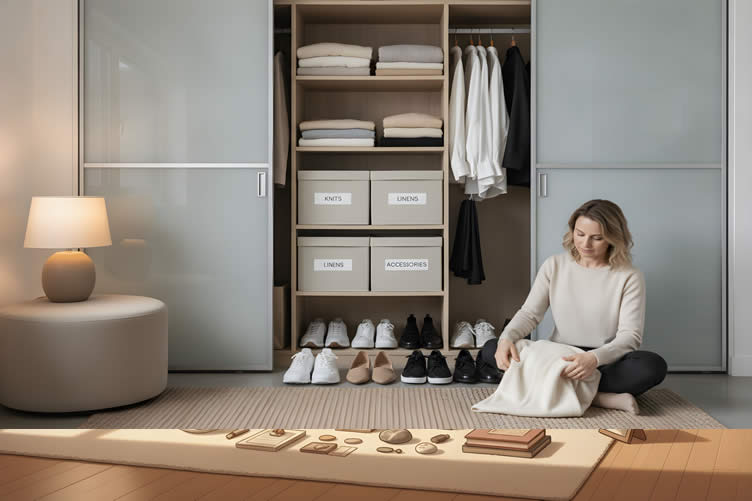
Even the best storage system will eventually feel cramped if it’s filled with items you no longer wear or need.
A closet can only hold so much, and those forgotten sweaters or never-worn shoes quietly take up space that your favorite pieces deserve.
Regular decluttering is what keeps a small closet from sliding back into chaos, and the KonMari Method offers a clear, gentle framework for making that process sustainable, so tidying up feels less like a chore and more like a habit you can actually keep.
AI generated image by 123rf.com
-
The Core Principle: Keep What Sparks Joy
Developed by organizing consultant Marie Kondo, the KonMari Method asks you to hold each item and ask whether it still brings value or joy to your life.
Items that no longer serve a purpose are thanked for their service and released, rather than shoved to the back of the closet out of guilt or indecision.
-
Sorting By Category, Not Location
Rather than tackling your closet shelf by shelf, the KonMari Method recommends sorting by category — all tops together, all pants together, all dresses together — regardless of where they’re currently stored.
This approach makes it easier to see exactly how much of each category you own, which often reveals duplicates or excess you didn’t realize you had.
-
Making Decluttering A Recurring Habit
A single decluttering session won’t keep a small closet organized forever. Building in a seasonal check-in, such as a quick sort at the start of each season, prevents the slow creep of clutter and ensures your closet continues to reflect what you actually wear.
More Supporting Information
(view summary table and useful ideas – or scroll to side note and next topic)
Key Principle Details Implementation Declutter Regularly Using the KonMari Method ensures that even with the best storage system, the closet remains functional and organized over time.
Items you no longer need or wear should be removed to make space for those that matter most.
Approach decluttering as a recurring habit rather than a one-time task.
Conduct seasonal check-ins to maintain order and ensure the closet reflects what you actually wear.
Core Principle: Keep What Sparks Joy The KonMari Method developed by Marie Kondo emphasizes keeping items that bring joy or value.
Items no longer serving a purpose are thanked for their service and respectfully removed.
Follow the practice of assessing each item individually by holding it and determining if it contributes joy or value to your life. Sort By Category, Not Location Sorting items by category — such as tops, pants, or dresses — rather than by their location in the closet, offers a clearer view of how much you own in each category. Gather all similar items together to sort efficiently, helping identify duplicates or excess across categories. Make Decluttering Sustainable Decluttering should be a sustainable process, using thoughtful reflection to avoid overwhelming or guilt-driven decisions.
The KonMari Method turns tidying into a habit.
Integrate decluttering into your daily or seasonal routines to prevent clutter from taking over again. 
AI generated image by 123rf.com
Declutter Your Home
Organizing your closet often reveals items you no longer need, and the same goes for every corner of your home.
A room-by-room approach over 21 days makes decluttering manageable. Set a clear goal for each day, such as tackling one drawer, shelf, or cabinet, and work systematically.

Break the job into small tasks like sorting by category, discarding duplicates, or donating unused items.
With a few intentional steps each day, your home will feel more spacious, organized, and stress-free by the end.
view ideas: Declutter in 21 Days(new win)
-
Scroll up to directory … or scroll to next section: smart folding and hanging …
-
-

Download this PDF for a concise summary of everything you need to know about …?

-
-
6th Section: Use Smart Folding And Hanging Techniques
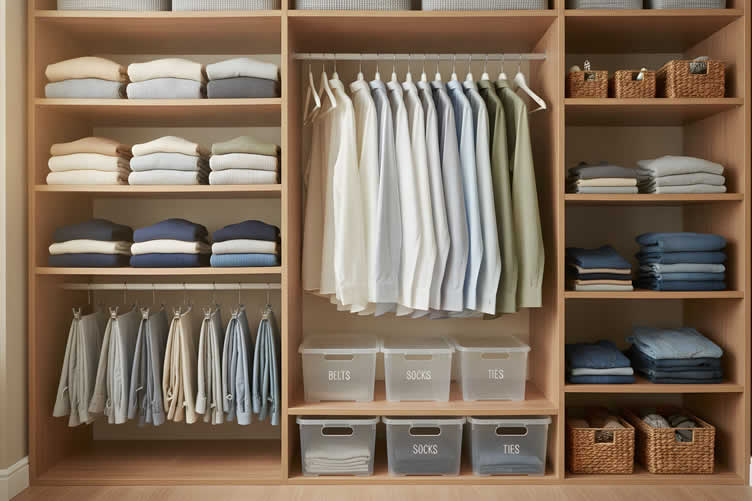
The way you fold and hang your clothes can affect closet capacity just as much as the shelves, bins, and rods themselves. Even a well-equipped closet can feel cramped when garments are stacked haphazardly or hung without a plan.
With a few smart folding and hanging techniques, you can make the most of every available inch of shelf and rod space, so your closet works harder for you without any added storage.
AI generated image by 123rf.com
-
Vertical Folding For Drawers And Shelves[ view]
Vertical folding, another hallmark of the KonMari approach, involves folding garments into small rectangles that stand upright rather than stacking flat.
This technique allows you to see every item at a glance, since nothing is hidden beneath a pile, and it typically fits more items into the same drawer or shelf space than traditional flat folding.
-
Strategic Hanging By Length[ view]
Arranging hanging items by length — shortest to longest — creates a tiered visual effect that also opens up usable floor or shelf space beneath shorter garments.
This space can hold shoe racks, baskets, or stackable bins that would otherwise go unused.
-
Grouping By Category And Color[ view]
Grouping clothing by category and then by color within each category creates visual order that makes getting dressed faster and easier.
This system also makes it immediately obvious when something is out of place, which supports the long-term maintenance of your organized closet.
More Supporting Information
(view summary table and useful ideas – or scroll to side note and next topic)
Technique Description Key Benefits Smart Folding and Hanging This approach focuses on the techniques used to fold and hang clothes effectively.
It maximizes closet space by preventing clutter and ensuring all items are stored with intention.
Makes the most of available storage space without requiring additional storage fixtures. Vertical Folding Garments are folded into small rectangles that stand upright rather than stacking flat.
This method, popularized by the KonMari method, ensures better visibility of all items.
Allows for easier access to all items at a glance and increases drawer or shelf capacity. Strategic Hanging by Length Clothing is arranged from shortest to longest to create a tiered effect.
This opens up additional floor or shelf space beneath shorter items for effective use.
Creates space for other storage like shoe racks or bins and enhances visual order. Grouping by Category and Color Clothing is first grouped by type and then organized by color within each category.
This system creates an intuitive, visually appealing layout.
Speeds up outfit selection and maintains organized spaces by making it clear when something is out of place. 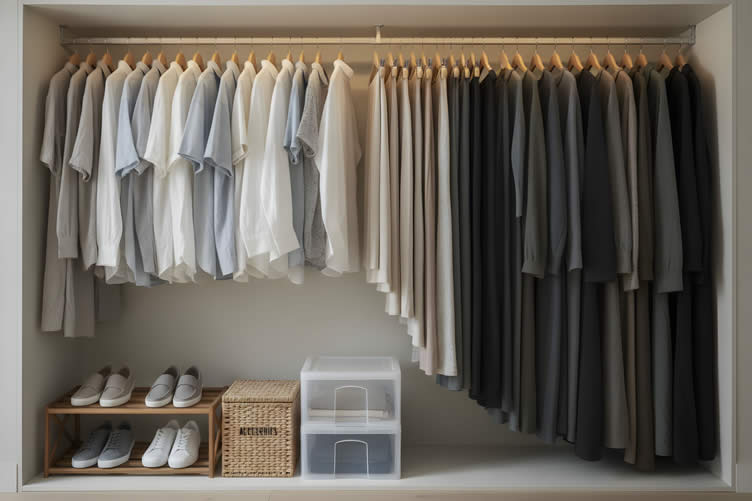
AI generated image by 123rf.com
Maximizing Space
Finding room for a proper closet can be a real challenge, especially when every square foot in your home is precious.
But closets aren’t the only space dilemma—living in a smaller space often means getting creative with storage throughout.

From under-bed organizers to multi-functional furniture, small-space living calls for clever solutions to make every corner count.
Discover practical tactics to keep your home organized without sacrificing style or functionality.
view ideas: Ideas for Small Homes(new win)
-
Scroll up to directory … or scroll to next section: frequently asked questions …
-
-
-
-
7th Section: Frequently Asked Questions
-
How much does it cost to organize a small closet on a budget?
Most of the solutions covered here, including double-hanging rods, over-the-door organizers, and LED strip lights, cost well under $100 combined. Adjustable or modular shelving systems can range higher depending on size and materials, but phased purchases keep the overall investment manageable.
-
Can I add a second closet rod without professional installation?
Yes. Tension rods and adjustable bracket systems are designed for simple do-it-yourself installation and require no permanent alterations, making them ideal for renters or anyone who wants a quick upgrade.
-
What’s the best storage solution for a closet with no floor space?
Vertical solutions work best in closets without extra floor space. Wall-mounted shelving, over-the-door organizers, and under-shelf baskets all add storage capacity without encroaching on the closet floor.
-
How often should I declutter my closet?
A seasonal check-in, roughly every three to four months, is generally enough to prevent clutter from building back up, especially when paired with a consistent sorting method like the KonMari approach.
-
Are modular closet systems worth it for a small space?
Modular systems are particularly well suited to small closets because they can be purchased and installed incrementally, allowing you to expand storage over time rather than committing to a full system upfront.
-
What type of lighting works best in a closet without electrical wiring?
Battery-operated LED strip lights or motion-sensor lights are the most practical options for closets without existing wiring, since both can be mounted using adhesive strips with no electrician required.
-
Will adding more storage make my closet feel more cramped?
Not if the storage is strategic. Vertical and hidden storage solutions, such as wall-mounted shelves and under-shelf baskets, add capacity without reducing usable floor or hanging space, which keeps the closet feeling open.
-
What’s the difference between adjustable shelving and a modular closet system?
Adjustable shelving typically refers to shelves within a single track-and-bracket unit that can move up or down, while a modular system includes a broader range of interchangeable components, such as drawers and rods, that can be added or rearranged independently.
More Supporting Information
(view summary table and useful ideas – or scroll to side note and next topic)
Question Answer How much does it cost to organize a small closet on a budget? Most of the solutions covered here, including double-hanging rods, over-the-door organizers, and LED strip lights, cost well under $100 combined.
Adjustable or modular shelving systems can range higher depending on size and materials, but phased purchases keep the overall investment manageable.
Can I add a second closet rod without professional installation? Yes. Tension rods and adjustable bracket systems are designed for simple do-it-yourself installation and require no permanent alterations, making them ideal for renters or anyone who wants a quick upgrade. What’s the best storage solution for a closet with no floor space? Vertical solutions work best in closets without extra floor space. Wall-mounted shelving, over-the-door organizers, and under-shelf baskets all add storage capacity without encroaching on the closet floor. How often should I declutter my closet? A seasonal check-in, roughly every three to four months, is generally enough to prevent clutter from building back up, especially when paired with a consistent sorting method like the KonMari approach. Are modular closet systems worth it for a small space? Modular systems are particularly well suited to small closets because they can be purchased and installed incrementally, allowing you to expand storage over time rather than committing to a full system upfront. What type of lighting works best in a closet without electrical wiring? Battery-operated LED strip lights or motion-sensor lights are the most practical options for closets without existing wiring, since both can be mounted using adhesive strips with no electrician required. Will adding more storage make my closet feel more cramped? Not if the storage is strategic. Vertical and hidden storage solutions, such as wall-mounted shelves and under-shelf baskets, add capacity without reducing usable floor or hanging space, which keeps the closet feeling open. What’s the difference between adjustable shelving and a modular closet system? Adjustable shelving typically refers to shelves within a single track-and-bracket unit that can move up or down, while a modular system includes a broader range of interchangeable components, such as drawers and rods, that can be added or rearranged independently. 
AI generated image by 123rf.com
Upgrade Your Closet with the Right Tools
Transforming your closet into a functional, organized space starts with the right DIY setup.
Whether you’re planning to install modular systems, add extra shelving, mount additional rods for more hanging options, or even improve the lighting, having the correct tools is essential.

From a dependable power drill to precise measuring tape and sturdy anchors for secure installs, these tools will ensure your project runs smoothly and delivers a closet refresh that’s built to last.
view ideas: DIY Tool Guide(new win)
-
Scroll up to directory … or scroll to next section: perhaps something bigger (custom build) …
-
-

Easily determine the dimensions you need for any home remodeling project …
… ensuring functionality, visual appeal, and compliance with building codes.
-
-
8th Section: Perhaps It’s Time For Something Bigger
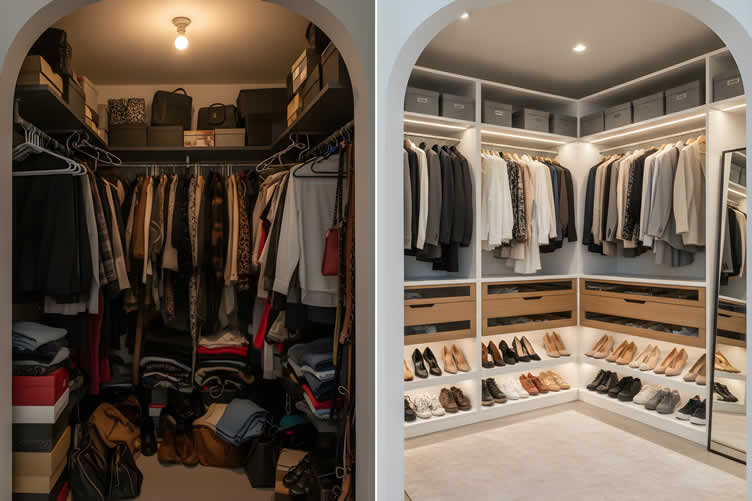
Sometimes, your current closet simply doesn’t measure up to your needs. Whether you’re constantly battling overcrowded shelves, untangling masses of clothes hangers, or wishing for more room to organize efficiently, a lack of adequate space can make daily life more stressful.
Expanding your closet into a walk-in might just be the solution. With the help of a professional contractor, you can re-imagine your space, incorporating design features that meet your specific organizational and storage needs.
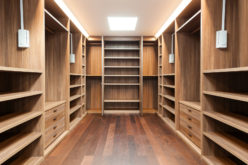
AI generated image by 123rf.com
A contractor will begin by assessing your current layout to determine the most effective way to achieve your vision. This might involve removing walls, reconfiguring nearby rooms, or converting underutilized areas of the home into functional closet space.
By carefully crafting a walk-in design tailored to you, contractors can help turn a chaotic or cramped closet into a sleek and inviting area where everything has its place.
-
The Space for a Walk-In Closet
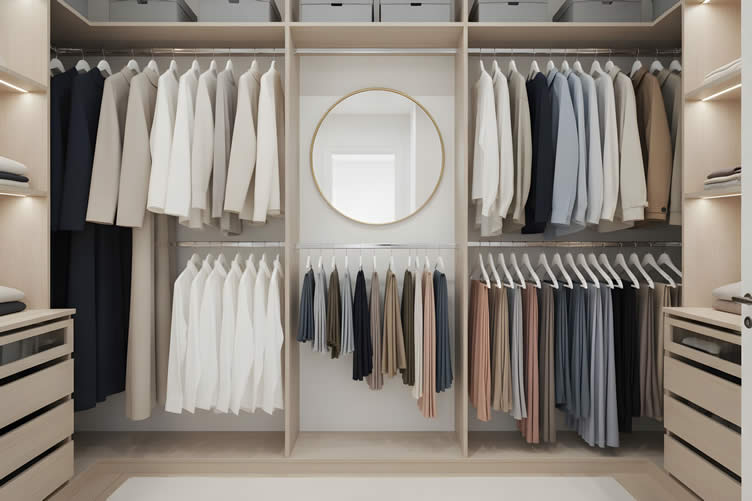
Creating space for a walk-in closet doesn’t have to be overwhelming. Many homes have underutilized areas, such as spare bedrooms, hallways, or unused corners, that can be transformed into stylish and functional storage solutions.
For smaller homes, a contractor with expertise can find surprising ways to maximize even limited square footage—such as incorporating an alcove or unused attic space. You’d be amazed at how creative solutions and skilled craftsmanship can unlock hidden potential in your home layout.
-
The Benefits of a Walk-In Closet
- Improved Organization:
A walk-in closet gives you the room to design a logical and versatile organization system, where clothes, shoes, and accessories all have their designated space. No more digging through piles or wasting time hunting for items! - Enhanced Aesthetics and Personalization:
With the additional space, you can install stylish shelving, lighting, and custom finishes that match your taste and enhance the overall aesthetic of your home. Your walk-in closet becomes both a functional storage space and a luxurious personal retreat. - Better Daily Efficiency:
Everyday routines become smoother when everything is accessible and visible. A walk-in closet minimizes the frustration often associated with cramped storage spaces, saving you time and keeping energy focused on the things that matter. - Added Home Value:
A well-designed walk-in closet isn’t just a practical upgrade—it’s an investment. Homes with customized, attractive storage features often appeal to buyers, boosting resale potential if you decide to sell your property in the future.
By collaborating with a skilled contractor, you’ll gain the knowledge and expertise needed to design a walk-in closet that enhances your everyday life and makes the best possible use of your home’s potential.
Personalized, functional, and stylish, it’s a decision you’ll appreciate for years to come.
- Improved Organization:
LetsRenovate has partnered with HomeAdvisor (Angi)™, a renowned provider of highly-rated, carefully-vetted local closet contractors. Start your search here by choosing the type of contractor you need and entering your zip code to find local professionals.
AI generated image by 123rf.com
Now Tackle the Garage
Congratulations on transforming your closet into a well-organized space! Now is the perfect time to bring that same energy to your garage.
Consider investing in storage cabinets to create a dedicated hub for bulk-buying items.

With the right setup, you’ll make the most of wholesale deals while keeping your essentials neatly tucked away.
It’s a functional upgrade that offers both convenience and savings.
view ideas: Bulk-Buying Savings Hub(new win)
-
Scroll up to directory … or scroll to conclusion and references …
-
-
-
Conclusion
… start small and build an organized closet over time
A small bedroom closet doesn’t have to limit how organized or functional your space feels.
The strategies outlined here — double-hanging rods, adjustable shelving, hidden storage, better lighting, regular decluttering, and smart folding techniques — all deliver real results without the cost or disruption of a custom closet installation.
The best approach is rarely to overhaul everything at once. Choose one or two upgrades that address your biggest frustration first, whether that’s a lack of hanging space or difficulty seeing what you own, and build from there.
Over time, these incremental changes add up to a closet that works as hard as you do, no matter how small the space.
References
- National Association of Productivity and Organizing Professionals (NAPO) — General organizing standards and best practices for residential storage spaces
- Marie Kondo, "The Life-Changing Magic of Tidying Up" — Foundational source for the KonMari sorting and folding methodology
-
Quick scroll to more bedroom and closet ideas …
- What comments can you share about
recommendations for a small bedroom closet organization?

Calendar For:
Home Maintenance
File Type:
… view illustration “becoming a bank”
… view our sharing links below for a quick "share the knowledge"
Find Handyman Services (opens new win) Handyman Carpentry Electrical Plumbing top-rated, pre-screened local contractors FREE: download contractor selection enter zip code – powered by HomeAdvisor ™
Quick Contractor Guides selecting negotiating working with inspecting

Cover image credit: small bedroom closet by 123rf.com
end of post … please share it!
 |
did you find small bedroom closet analysis helpful? If so, please share the article with your friends and family! |
Nice pic idea? Leave us a quick comment below.
And please share this pic idea within your social networks.