Quick Answer:
An anti-showroom living room trades algorithm-approved perfection for personality. Rather than copying a single trend, designers recommend rearranging seating for conversation, restoring one meaningful piece, choosing one expressive style instead of several, and using color intentionally—then testing whether the finished room actually supports how you read, host, and relax.
Designers have a name for this moment—resistance to what Vogue calls algorithm-friendly sameness, in favor of rooms that look genuinely lived in.
Lucy Hammond Giles, director at Sibyl Colefax & Fowler, has noticed a shift on social media away from decorating purely for the photograph, toward people proudly sharing rooms as they’re actually used.
Sarah Lederman of Sarah Lederman Interiors goes further, describing an “anti-algorithm era” in which clients once arrived with the same handful of screenshots and are now asking for something stranger, more personal, and a little quirky in the best possible way.
This article isn’t another roundup telling you to buy everything trending at once. It’s a practical path through five distinct, evidence-backed ideas—conversation-first layouts, furniture restoration, expressive styling, intentional color, and a simple lived-in test—so your living room reflects your life instead of someone else’s feed.
- post content
- The Showroom Problem
- Rearrange Before You Replace
- Give One Piece A Second Life
- Choose One Expressive Direction
- Use Color To Set A Mood
- conclusion
- FAQs
- view table:content summary
- view notes:collective tips
- view analysis:Living Room for Great Conversation
- view ideas:latest remodeling analysis
The Showroom Problem
A room designed solely to photograph well often fails the people who actually sit in it. Vogue’s 2026 trend reporting describes a growing awareness that decorating should never exist purely for the picture. Sarah Lederman explains that social media encouraged a kind of aesthetic convergence, where everyone’s inspiration came from the same handful of images, and homes began to look increasingly alike.
Her clients now want something stranger, more personal, and genuinely reflective of who lives there.
That distinction matters more than any single color or furniture choice. A living room that feels meaningful to live in, rather than one engineered to perform well online, starts with honest questions:
Where do you actually sit? What do you reach for during a quiet evening? Nick Ozemba of In Common With frames this as character over perfection—mixing period references and materials instead of forcing a perfectly coordinated look.

Rearrange Before You Replace
Before buying anything new, look at how your current furniture is arranged. Teddy McCarthy of Hart Howerton points out that the open-floor-plan era is winding down, with designers returning to rooms built for specific uses throughout the day. A living room built for conversation looks different from one built purely to face a screen.
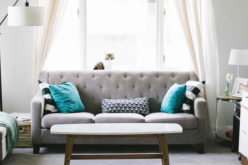
Try angling two chairs toward the sofa instead of lining every seat up toward the television. Pull furniture a few inches off the walls to create a tighter, more intimate cluster. Keep a small side table within arm’s reach of every seat, and treat the TV as one focal point among several rather than the only one in the room.
Kendall Knox of Olive Ateliers describes this kind of seating as sitting “at the center of gathering, conversation, lingering dinners, homework at the kitchen table”—in other words, the moments that make a home feel alive.
Zillow’s November 2025 listing research found that mentions of reading nooks in home descriptions rose 48% year over year, a sign that buyers and homeowners alike are prioritizing quiet, dedicated corners over one-size-fits-all open space.
more info below

Designing a Living Room for Great Conversation
Your living room is more than just a place to relax; it’s the heart of your home, where connections are made and memories are shared.
Give One Piece A Second Life
Restoration is quietly becoming one of the most practical ways to add personality without starting from scratch. Interior designer Hema Persad calls this the “inheritance aesthetic”—millennials intentionally styling pieces they’ve inherited or found secondhand, then hiring professionals for affordable restoration.
According to Yelp’s 2026 Summer Home Trends report, comparing Q1 2025 to Q1 2026, searches for expert historic restoration increased 2,697%, framed mirror installation searches rose 733%, and custom upholstery searches grew 70%.
These are search and project-request figures from Yelp, not national sales data, but they point to a clear behavioral shift toward repairing rather than replacing.
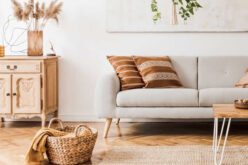
You don’t need an entire room of restored furniture to see the effect. One piece—a scratched side table, an inherited armchair, a tarnished mirror—reupholstered or refinished can anchor a room with a story no catalog item can match.
Wendy Labrum, a designer quoted in Vogue’s 2026 trend coverage, notes that never matching wood grain exactly makes a space feel collected instead of catalog, which is precisely the effect a single restored piece delivers.
Choose One Expressive Direction
It’s tempting to pull a little from every trend report, but Pinterest’s Predicts 2026 forecast works best as a menu, not a checklist. Two of its clearest living-room directions sit at opposite ends of the personality spectrum, and picking one tends to produce a more coherent room than blending both.
The first, which Pinterest calls FunHaus, leans into circus-inspired charm: bold stripes, sculptural silhouettes, and a wink of playfulness.
Pinterest reports an 130% increase in searches for “circus interior” and a 40% rise in interest in striped ceilings, comparing September 2024–August 2025 with the prior year. Pinterest’s own advice is to balance punchy pattern with a pared-back palette so the space feels elevated rather than costume-like.
The second direction, Neo Deco, modernizes Art Deco glamour with crisp chevrons, fan arches, and geometric pieces edged in chrome or brass. Pinterest’s forecast notes an 80% increase in interest around red marble bathrooms and a 40% rise in “pendant lamp” searches over the same comparison window.
Choose FunHaus if your living room benefits from warmth and humor; choose Neo Deco if you’re drawn to polish and geometry. Either works—layering both in one small room rarely does.
Use Color To Set A Mood
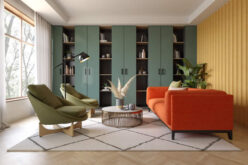
Color is where designer opinion and measurable buyer behavior overlap most clearly, so it’s worth separating the two. On the opinion side, Vogue’s trend reporting features designers like Katie Harbison, who describes harnessing deep, muddy greens, caramels, and ochre in upholstery while also color-drenching rooms in those same palettes.
Anne-Marie Barton explains that drenching a room—walls and ceiling alike—in one tone softens architecture and gives a space emotional weight.
On the measured side, Zillow’s November 4, 2025 listing analysis found that mentions of color drenching in home listing descriptions rose 149% year over year, and its paint research suggests a deep blue bedroom could boost a home’s sale price by more than $1,800.
That’s a meaningful data point if resale value matters to you: color drenching isn’t just an aesthetic risk, it’s a documented listing trend. Choose a single saturated hue—on walls, trim, and ceiling together—if you want a cohesive, enveloping mood; stick to lighter, more neutral tones if you’re prioritizing broad buyer appeal above personal expression.
The Lived-In Test
Once the furniture is arranged, the restored piece is in place, and a direction and color are chosen, ask one final question: does this room actually support what you do in it? If you read most evenings, is there a comfortable chair with good light nearby? If you host often, is there enough flexible seating angled for conversation?
Yelp’s 2026 report found that game room searches rose 70% and requests to reconfigure walls for hosting and hobbies increased 75%, evidence that more homeowners are shaping rooms around specific activities rather than generic “living room” expectations.
A truly anti-showroom living room isn’t defined by any single trend from this list. It’s defined by whether the room still works once the photograph is taken—whether it invites you to sit down, stay a while, and use it the way you actually live.
home improvement ideas to consider (complete directory – new win):
Frequently Asked Questions
-
What is an anti-showroom living room?
An anti-showroom living room is a space designed around how its occupants actually live, rather than how it photographs. Designers quoted in Vogue’s 2026 trend reporting describe this as prioritizing authenticity and personal meaning over algorithm-friendly, picture-perfect staging.
-
How do I rearrange my living room for conversation instead of just the TV?
Angle two seats toward each other rather than all seating toward the screen, pull furniture slightly off the walls to create an intimate cluster, and keep a small table within reach of every chair. Treat the television as one focal point among several instead of the only one in the room.
-
Is it cheaper to restore furniture than to replace it?
Restoration costs vary by piece and damage, but Yelp’s 2026 Summer Home Trends report found that search and project-request volume for furniture restoration services rose sharply between Q1 2025 and Q1 2026, including a 2,697% increase in expert historic restoration searches, suggesting many homeowners find restoration a worthwhile alternative to replacement.
-
What’s the difference between FunHaus and Neo Deco styles?
FunHaus is a Pinterest-identified 2026 trend built around circus-inspired playfulness, bold stripes, and sculptural shapes. Neo Deco modernizes Art Deco glamour with chevrons, fan arches, and chrome or brass-edged geometric pieces. Choose FunHaus for warmth and humor, and Neo Deco for polish and geometric structure.
-
What is color drenching, exactly?
Color drenching means painting a room’s walls, trim, and often the ceiling in a single saturated hue to create a cohesive, enveloping mood. Vogue-featured designers describe it as giving a space emotional weight and softening its architecture.
-
Will color drenching hurt my home’s resale value?
Available evidence suggests the opposite. Zillow’s November 2025 listing analysis found mentions of color drenching in listings rose 149% year over year, and Zillow’s paint research indicates a deep blue bedroom could increase sale price by more than $1,800.
-
How can I test whether my finished living room is truly lived-in?
Ask whether the room supports your actual habits—reading, hosting, relaxing, or working. Yelp’s 2026 report found rising searches for game rooms and reconfigured walls built around hosting and hobbies, reflecting a broader shift toward activity-specific living spaces.
-
Can I apply these ideas to a small living room?
Yes. Conversation-first layouts, a single restored piece, one expressive accent, and a drenched color scheme all scale down well. Smaller rooms often benefit most from choosing one direction clearly rather than spreading several trends across limited square footage.
-
Where should I start if I want to personalize my living room this weekend?
Start with rearranging what you already own. Reposition seating toward conversation, identify one piece worth restoring, and hold off on new purchases until the layout itself feels right.
| Section | Description | Details |
|---|---|---|
| The Anti-Showroom Living Room | Concept | An approach where personality replaces algorithm-driven perfection. Designers encourage purposeful decisions, like rearranging furniture for conversation, restoring meaningful pieces, choosing expressive styles, and using intentional colors to create a space that supports living, not just aesthetics. |
| The Showroom Problem | Issue | Rooms designed solely for photographs often lack livability. Resistance to aesthetic sameness now motivates people to create spaces that reflect their personal lives rather than a curated online trend. |
| Rearrange Before You Replace | Solution | Adjust current furniture arrangements first. Focus on conversation-based layouts, intimate clusters, and minimizing the dominance of TVs, with side tables at hand for practicality. |
| Give One Piece A Second Life | Restoration | Restoring a single piece of furniture brings unique character to a room. Trends indicate a shift toward repair over replacement, such as refinishing inherited items or restoring vintage finds for personality and individuality. |
| Choose One Expressive Direction | Styling | Focus on either bold, playful FunHaus designs or polished Neo Deco aesthetics instead of blending trends. Choosing one makes the room more coherent and less visually overwhelming. |
| Use Color To Set A Mood | Design | Intentional use of color influences mood and functionality. Designers recommend single-tone drenching for emotional depth or lighter shades for broader appeal and resale considerations. |
| The Lived-In Test | Practical Evaluation | A room’s success lies in its usability. The layout, style, and design should support the homeowner’s specific activities, like reading, hosting, or relaxing, ensuring the space feels authentic and functional. |

Find Interior Design Services Decorators Interior Designers Furniture Painting & Staining top-rated, pre-screened local contractors FREE: download contractor selection enter zip code – powered by HomeAdvisor ™


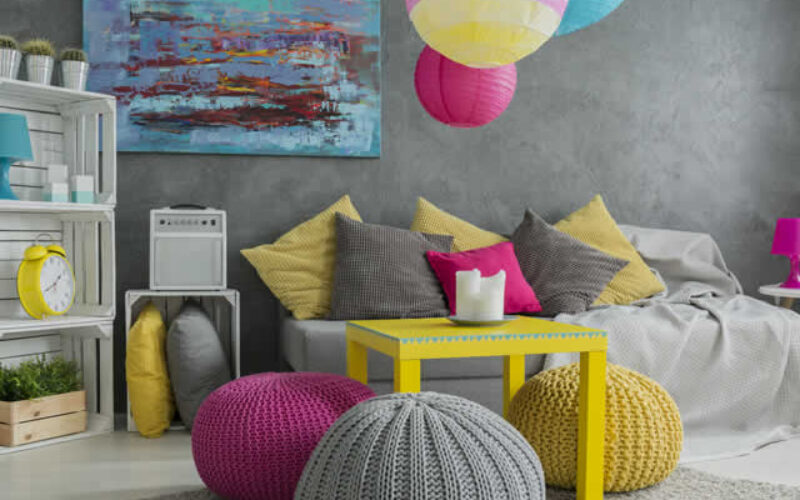
Image credit: living room personality by envato.com
end of post … please share it!
| more photo remodeling |
Jump Over to Our Photo Analysis Center for Ideas on
"Renovating Home"
|__________________________________________________________|
home remodeling surprise
find out where it might go - new win


Helpful article? Leave us a quick comment below.
And please share this article within your social networks.