Durability, maintenance requirements, appearance, and climate compatibility all influence your decision. Understanding these factors will help homeowners feel confident about their investment and ensure the structure complements the surrounding landscape.
This guide explains how to choose the right pergola material so you can balance aesthetics, function, and longevity.
Understanding the Importance of Material Selection
Pergola materials determine how your structure handles weather, aging, and daily use. Some materials provide natural beauty, while others focus on durability and minimal upkeep. When homeowners evaluate pergola options, they should consider how much maintenance they are willing to perform and how the pergola will fit with the design of their outdoor space.
Material also influences the long-term cost of ownership. A lower upfront price might seem appealing, but materials that require frequent staining, sealing, or repairs can become more expensive over time. Choosing the right material from the beginning can help prevent frustration and extend the lifespan of the pergola.
Wood Pergolas: Natural and Timeless
Wood is one of the most popular pergola materials because it offers warmth and a classic appearance that blends naturally with outdoor environments. Cedar, redwood, and pressure-treated lumber are common choices. Each option provides a unique grain pattern and allows homeowners to stain or paint the wood to match surrounding structures.
Wood pergolas also allow for customization. Builders can easily modify designs, add decorative elements, or adjust the size to suit specific landscapes. However, wood requires consistent maintenance. Homeowners should expect periodic sealing or staining to protect against moisture, insects, and sun damage.
Vinyl Pergolas: Low Maintenance and Clean Style
Vinyl pergolas appeal to homeowners who want a clean, modern look with minimal upkeep. Unlike wood, vinyl does not require staining or painting. It resists moisture, insects, and rot, which makes it a practical choice for many climates.
Vinyl structures typically maintain their color and structure for years with simple cleaning. However, vinyl offers fewer customization options compared to wood, and some homeowners prefer the natural character that wood provides.
Aluminum Pergolas: Strength and Longevity
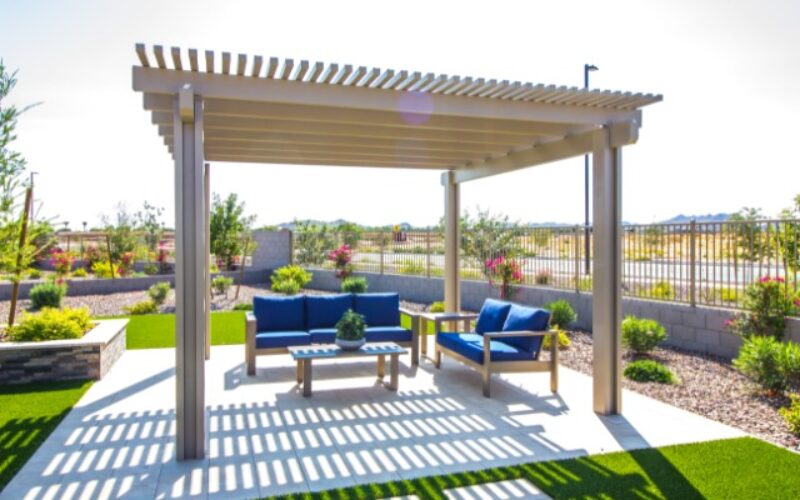
Aluminum pergolas combine durability with a sleek, contemporary appearance. They resist rust, warping, and weather damage, which makes them ideal for homeowners who want long-term performance without frequent maintenance. Aluminum also tends to be lightweight while remaining structurally strong.
One common mistake to avoid when buying a pergola is choosing a material based only on appearance rather than considering climate and durability. Aluminum works particularly well in regions with heavy rain, intense sun, or fluctuating temperatures.
Choosing the Best Option for Your Outdoor Space
Selecting the right pergola material requires balancing appearance, durability, and maintenance expectations. Wood offers natural beauty and customization, vinyl provides low maintenance convenience, and aluminum delivers strength and longevity.
Homeowners can evaluate climate, maintenance needs, and design preferences to confidently decide how to choose the right pergola material for a lasting outdoor space.
Image Credentials: pergola material By Tom, 387063070
end of post … please share it!
| more photo remodeling |
Jump Over to Our Photo Analysis Center for Ideas on
"Renovating Home"

|__________________________________________________________|
home remodeling surprise
find out where it might go - new win


Helpful article? Leave us a quick comment below.
And please share this article within your social networks.