Quick Answer:
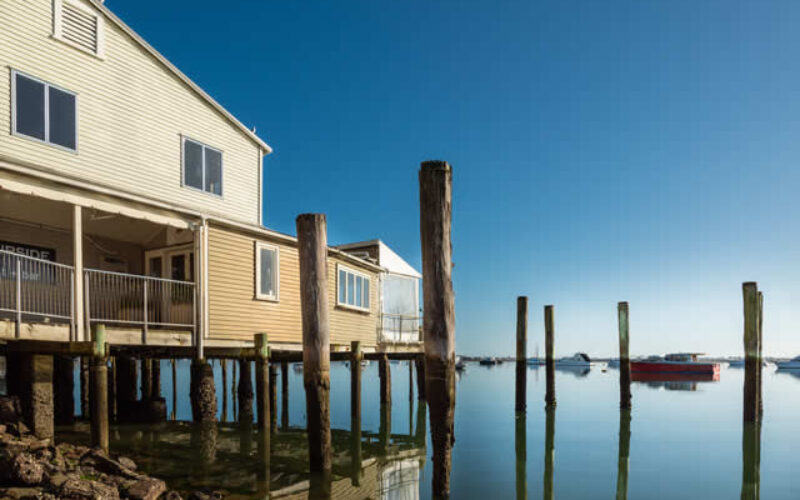
Rental property that is two miles from the ocean ages differently compared to one located inland. Not only does the degradation process involve metals, but it also includes the degradation of paint, seals, mechanicals and building parts in a way that surprises many property owners facing their first big repair bill.
- Seasonal Maintenance Checklist for Coastal Rental Properties
- Rinse your HVAC condenser coils twice a year
- Prepare storm protection hardware
- Audit your building envelope for signs of salt degradation
- Make sure that the roof drainage and the foundation are protected
- Check indoor humidity and weather-stripping between tenants
- Consult local specialists on time
- view notes:collective tips
- view analysis:Preventing Foundation Problems: Tips for Homeowners
- view ideas:latest remodeling analysis
Rinse your HVAC condenser coils twice a year
Most people forget that outdoor condenser coils come into direct contact with the coastal environment. Eventually, salt builds up on the fins and coil surfaces, reducing airflow and energy efficiency.
If your HVAC condenser coils are already contaminated due to dust, pollen and pollution, energy consumption increases up to 37% (Texas A&M University).

Twice per year, during the spring and autumn months, wash down the condenser coils with fresh water. Using a pressure washer is not advised as the fins are fragile.
Gentle washing with garden hose set on a low pressure should normally clear all salts and dirt from the coil surfaces.
If any additional protections like sacrificial anode or anti-corrosion coatings have been installed, check their condition after every wash-down.
Replacing a single coated part is way cheaper than replacing a whole condenser unit.

Prepare storm protection hardware
Impact-resistant windows and storm shutters are only useful if you can operate them quickly. Salt crust forms in the window tracks, hinge pins and locking mechanism, and if you cannot open your shutters quickly before a storm hits, you are left unprotected.
Before the beginning of the hurricane season, clean all the tracks and hinges with the stiff brush to remove salt crust, and lubricate them with the silicone-based dry lubricant.
Do not use WD-40 – it is petroleum-based and attracts sand, creating extra wear inside your hardware over time. Also, check the seals on impact windows while you are there. A compromised seal allows rain to pass through and enter your property well behind the walls.
Audit your building envelope for signs of salt degradation
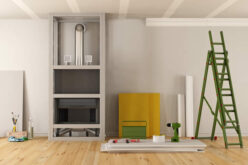
Your checklist on how to renovate your rental property should include inspection of all the exterior surfaces. You cannot do this task from a distance. Stucco, siding and paint all require closer examination.
Look for the hairline cracks, chalking (paint rubbing off your hand), or efflorescence (white, powdery salts on brick or concrete walls where water evaporates). Efflorescence means that water moves through your substrate and is most likely not limited to the immediate vicinity of these deposits.
If you find hairline cracks, applying elastomeric paint is the easiest, although far from cheapest and longest-lasting, solution. "10 year" flex-paint fails in 5-7 years of use in coastal, high-salt environment.
However, latex paint fails much faster if you are not using elastomeric paint. Standard exterior latex paint coatings absorb too much water, which results in obvious bubbling and coating failure.
Part of this water is rainwater, and the other part is moisture, which is trapped inside the material and tries to evaporate under the heat of the sun. Modern elastomeric coatings have enough flexibility to span cracks, and porosity to let moisture evaporate.
Make sure that the roof drainage and the foundation are protected
Coastal winds carry a lot of sand. Gutters, which are clean in October, can be full of sand by February. Clogged gutters overflow onto the fascia boards, and provide moisture direct access to your attic.
Clear downspouts and clean gutters at every seasonal transition. Downspouts’ extensions should divert the runoff at least ten feet away from the foundation.
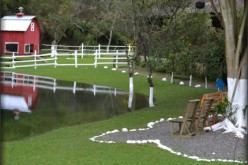
Water pooling near your house foundation in the humid coastal environment can seriously damage your house. Also, check soffit and fascia vents for clogging. They allow moisture to leave your attic space, and when these vents are blocked by debris, mold and wood rot appear.
about checking your foundation

Preventing Foundation Problems: Tips for Homeowners
Preventing foundation problems not only ensures the safety and stability of your home but also saves you from costly repairs in the long run.
Check indoor humidity and weather-stripping between tenants
Moisture inside a coastal rental property is different and harder to deal with. High ambient humidity drives moisture through even the smallest openings in the building envelope – under the door, around the window, through improperly closed exhaust vents.
The same applies to sliding glass doors: Moisture passes right through when they do not close fully. Test the interior humidity between tenant turnovers and make sure it is below 50%RH – higher humidity level creates a risk of mold development.
Inspect and service any dehumidifiers and replace or re-seal the weather-stripping on your sliding glass doors. These components are exposed to constant sun, salt and humidity cycling, so the weather-stripping fails sooner than on regular hinged door. New weather-stripping is a $30 fix. Mold remediation from the failed one costs you in thousands.
Consult local specialists on time
Doing everything on your own works for seasonal care. However, eventually, it becomes not enough. Coastal properties experience the same problems, but much sooner than others.
While some issue takes 3 years to show itself in the property, located 30 miles inland, it can happen within one season along the coast. In practice, some things are missed, some repairs are delayed, and one season of hurricanes reveals to you all the vulnerabilities that you were putting off.
And here comes local Home Management Services West Palm Beach expertise. It means understanding the patterns of humidity in South Florida, the knowledge of local professionals working with materials resistant to the weather conditions, and, most importantly, the frequency of your property inspections to keep it low-maintenance and high-value asset.
Seasonal care of coastal rentals is not optional. It is the key difference between a well-maintained, high-income-generating rental property and the one which slowly loses money on repairs.
home improvement ideas to consider (complete directory – new win):


Find Handyman Services (opens new win) Handyman Carpentry Electrical Plumbing top-rated, pre-screened local contractors FREE: download contractor selection enter zip code – powered by HomeAdvisor ™


Image credit: seasonal maintenance by envato.com
end of post … please share it!
| more photo remodeling |
Jump Over to Our Photo Analysis Center for Ideas on
"Renovating Home"
|__________________________________________________________|
home remodeling surprise
find out where it might go - new win


Helpful article? Leave us a quick comment below.
And please share this article within your social networks.