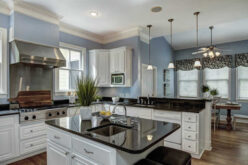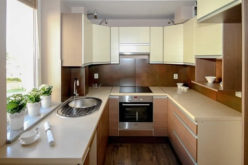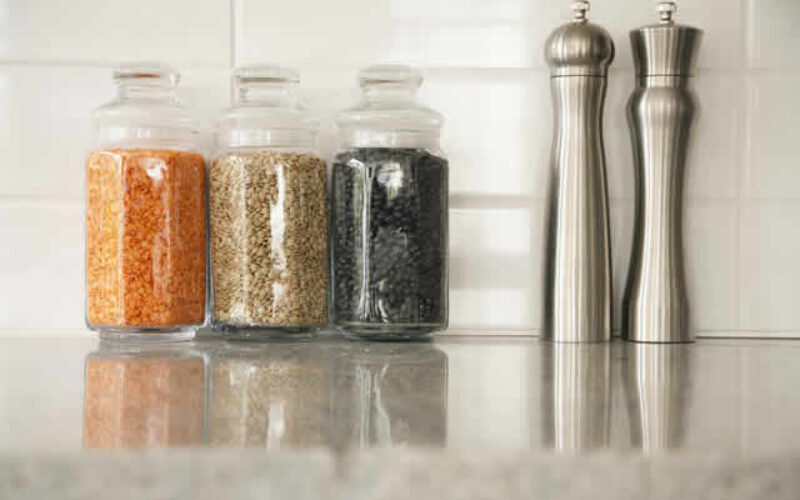
Well, natural stone slabs are exquisite premium options that stand up well against daily kitchen use, but require special care such as pH-balanced water and mild soap for proper care.
Granite
Granite countertops offer a premium aesthetic and feel more substantial than synthetic or laminate counters; their color variations also outshone those found with quartz. This makes them a popular choice in modern kitchens and bathrooms, alike.
Granite can be made into countertops of various sizes, shapes, and colors. It comes both as slabs and prefabricated pieces; slabs being the more popular choice. Granite is extracted from quarries in large blocks via drilling or chiseling before mining machines cut it into workable slabs five to nine feet wide and long that can then be polished to bring out its beautiful crystal flecks and patterns.

Although polished granite boasts a luxurious sheen, its maintenance is more challenging than that of non-polished varieties. As it’s slightly porous and susceptible to spills staining its surface, penetrative sealants should be used for stain prevention.
Granite counters may also be honed, giving them a softer sheen and more textural finish; however, any liquid must still be cleared away promptly or it could stain the surface permanently.
Most granite countertop manufacturers sell slabs with different finishes, with polished granite being the most common choice.
Polished granite adds brightness and shines in most homes, highlighting all of its colors, grains, and flecks – an excellent way to create a modern kitchen without overwhelming it with too many textures or details.
Other finishes of granite countertops include honed and leathered, each creating soft sheens with more texture. Honed is more comfortable to the touch and matches most cabinet types while not reflecting light as efficiently. Leathered is similar but features a darkened satin-like finish that is less reflective.
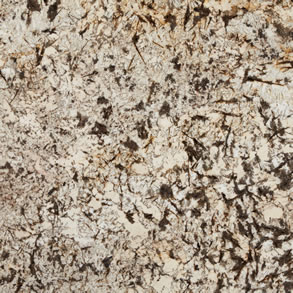
Brown and black granites are also widely utilized in kitchens. St. Cecilia from Brazil is an exceptional example of brown granite that displays vibrant colors while maintaining a natural feel, including creams, tans, and even some black hues with different-sized flecks throughout its surface.













Quartz
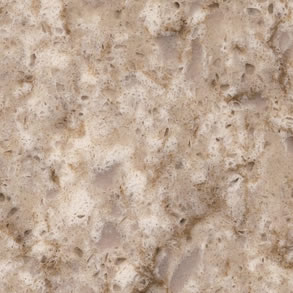
Quartz, the synthetic alternative to granite, is an increasingly popular countertop material. Offering an array of colors and patterns that can complement any style, it resists stains, bacteria growth, and water damage while remaining durable over time.
While quartz is more costly than other counter materials available today, it offers long-term usability with little risk of staining or other damage.
Quartz stone differs from natural stone in that it doesn’t need regular sealing to remain looking its best. Also, a quartz kitchen countertop has a nonporous surface that resists staining from oil, wine, and tomato juice spills without darkening its surface.
Its resin mixture that binds its chips creates an appealing shine, as well as allows different colors to be added for unique looks such as marble-inspired veining effects.
Quartz counters depend on how they were ground and their size. Coarse grinding will create a more rugged appearance, while a fine grind results in smooth surfaces. Additionally, quartz may contain other minerals or metals that contribute to color variations.
Some manufacturers even add reflective coatings that give their counters the appearance of polished marble.
Quartz counters may be durable, but they’re not heat or scorch resistant, which means extreme temperatures could damage them and require you to use a trivet for any pans left for extended periods on your countertop.
Acidic cleaners like floor strippers, toilet bowl cleaners, rust removers or furniture polishes could break down their resin content and cause discoloration if exposed directly on its surface.
Porcelain
Porcelain may not be quite as hard as quartz, but it remains an extremely durable countertop material. Porous than natural stone and less susceptible to staining or water absorption than its counterpart.
Porcelain resists staining more effectively while requiring less water upkeep overall, which helps keep your countertops looking cleaner for longer. Plus it resists etching too!
At first glance, porcelain can seem fragile during fabrication; however, according to this link – https://www.quora.com/Why-will-clay-when-heated-to-high-temperatures-harden-and-become-waterproof after being fired at high temperatures in a kiln it becomes very resilient and doesn’t crack as easily like some other countertop materials.
Therefore, working with an experienced fabrication and installation company that understands how best to handle fragile slabs is key.

Before you start any kitchen remodeling project, run some financial numbers to determine whether your kitchen renovation is a smart investment.
The numbers include the estimated costs, home value assessment, financing costs, and other related calculations.
Review these cost-related issues to kitchen remodeling vs. buying a new home.
links to internal page (opens new win)
| analyze the numbers | |
| estimate the cost of your project | |
| start assembling a budget | |
| get your home value |
The 2nd step for planning a new year kitchen renovation is deciding what you would like to do.
Will it be a –
- redesigning the kitchen,
- replacing the kitchen cabinets/counter,
- putting in an island,
- replacing your sink and faucet,
- buying new appliances,
- re-decorating,
- or something else by referencing this extensive kitchen remodeling guide.
You can find other kitchen &dining ideas by referencing our kitchen analysis and topic directories (opens new win)
| view kitchen "ideas" directory | |
| view latest "topics" for kitchen dining | |
Step 3 is sketching your ideas on paper (or digitally) and developing the kitchen spec plan.
The spec plan determines what type of kitchen materials and design considerations that will be needed. It will also contain the product specifications for each kitchen remodeling element.
You will use the spec plan and architectural design to bid the project out to a contractor.
links to internal page (opens new win)
| developing the spec plan | |
| sketch remodeling plan | |
| design considerations |
Step 4 is finding and negotiating the contract with a kitchen remodeling contractor.
Give your remodeling ideas and specs to a contractor for review and bid analysis. Use the local network (aligned with HomeAdvisor) to find the right contractor for your project.
Review guides for contractor selection and negotiation.
links to internal page (opens new win)
| search kitchen contractors | |
| selecting your contractor checklist |
| contractor negotiations | |
| contractor evaluation form |
Step 5 is arranging financing once you selected the contractor and finalized the contract for your project.
Using the equity value in your home is one of the best financing option for kitchen renovation. Start with a home equity line of credit or use the bank equity program.
Other options may include cash-out refinancing, personal savings, and/or financing from home improvement contractors.
links to internal page (opens new win)
| financing options | |
| getting qualified for financing | |
| negotiate rates |
Step 6 is where the project begins.
It starts with setting up the work area, removing everything that needs to be replaced, installing plumbing and electrical if needed, putting in the final touches, etc.
It also means working with the contractor, managing the project, and getting the remodeling project inspected before releasing any funds.
links to internal page (opens new win)
| working with the contractor | |
| managing remodeling project |
| about a home project inspections | |
| find home inspector |
Porcelain countertops can look just like natural stone materials like marble and granite, giving you an impressive, custom-built countertop to complement your home’s design theme and style.
Furthermore, this option can even save both time and money when retrofitted into kitchens and bathrooms that already feature existing counters – saving both time and money when replacing all counters at once!
Orphans
As well as natural stone options, there is also an emerging generation of sintered surfaces such as Dekton and Neolith that have almost zero porosity, offering numerous advantages such as hygiene, heat resistance (great for hot pans), scratch and stain resistance, ease of cleaning as well as being stylish contemporary alternatives to granite and quartz with their raw aesthetic.
Showy marble like this may not be ideal for family homes, but it has seen renewed popularity due to modern treatments that make it more durable and stain-resistant.
Still, soft materials like marble will mark easily, and chip more readily than harder countertops. Furthermore, its soft surface can easily cause temporary spills or splashes to turn into permanent etchings, necessitating regular care of this surface material.
other related articles of interest:
Marble’s timeless beauty cannot be rivaled. The dark neutral tones add elegance, while its stone surface develops an antique-like patina over time that recalls antique silverware. Furthermore, this dense material doesn’t absorb bacteria as easily making it antimicrobial.
While marble counter materials may be soft enough for everyday use without scratching easily when dropped onto them, any scratches caused by dropping heavy objects on them can easily be polished away with some sandpaper before wiping on mineral oil to restore luster and restore their beauty over time.
Find Kitchen Remodeling Services Kitchen Remodeling and Design Cabinets & Countertops Flooring Lighting Design Painting & Staining top-rated, pre-screened local contractors FREE: download contractor selection enter zip code – powered by HomeAdvisor ™


Image credit: how to choose the right counter for your kitchen renovation by envato.com
end of post … please share it!
| more photo remodeling |
Jump Over to Our Photo Analysis Center for Ideas on
"Renovating Home"
|__________________________________________________________|
home remodeling surprise
find out where it might go - new win


Helpful article? Leave us a quick comment below.
And please share this article within your social networks.